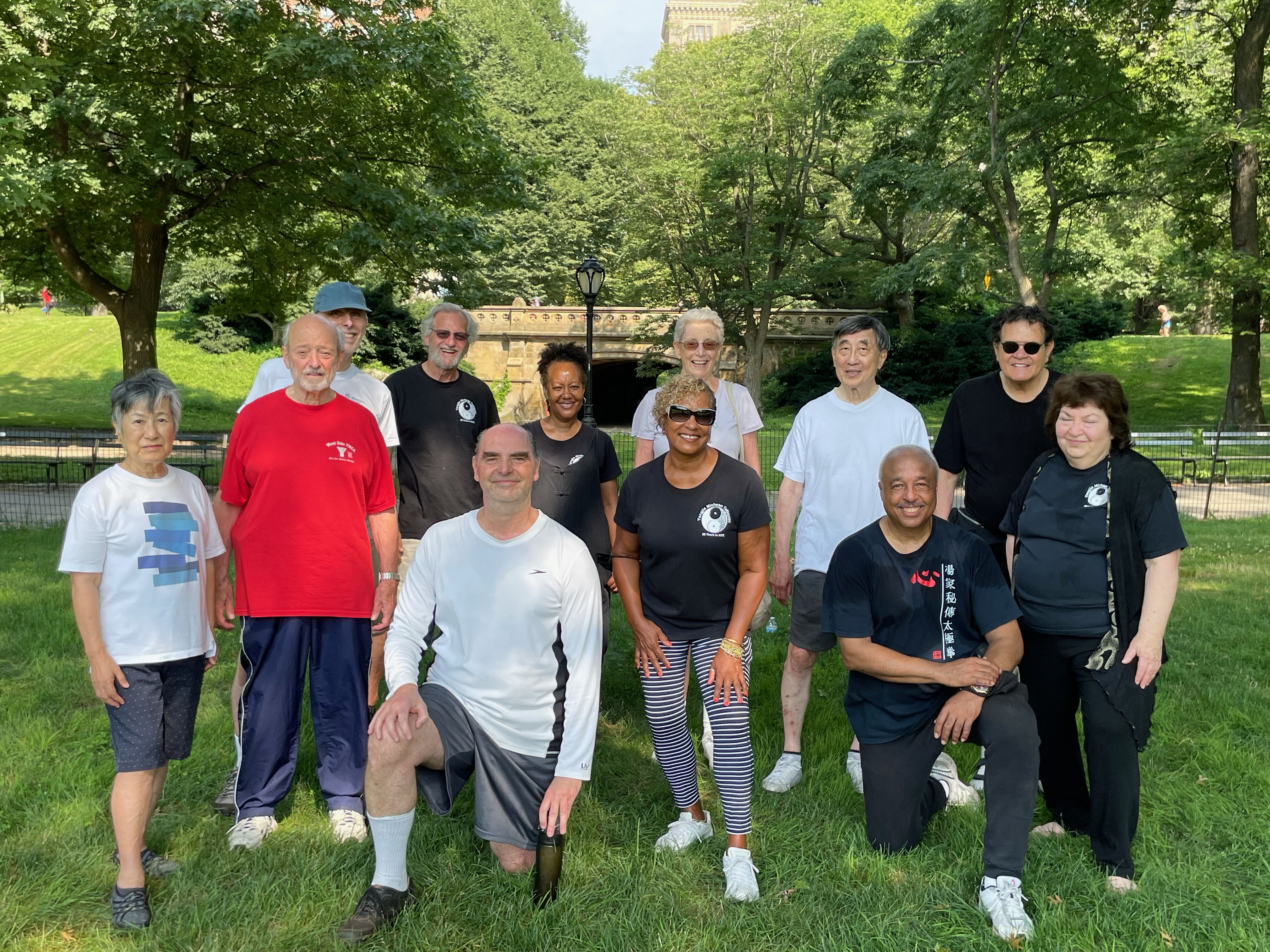
Yangjia Michuan Taiji: Taipei Notes and Commentaries on Tuishou by Mark A. Linett – Third Installment

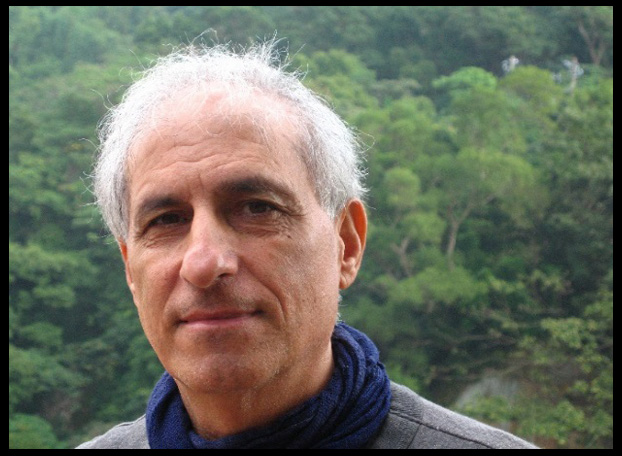
This is the third installment of the notes that Mark Linett, one of the original Western students of Master Wang Yen-nien, has put together, with commentary. Mark began his studies with Master Wang in Taipei in 1982. We are honored that he is allowing the NYC Yangjia Michuan Taiji site to publish them in their entirety. There will be installments published throughout the summer and fall of 2025 and winter of 2026.

You can read the first installment, with introductory notes, by clicking here: Tuishou Notes Installment One.

You can read the second installment by clicking here: Tuishou Notes Installment Two.

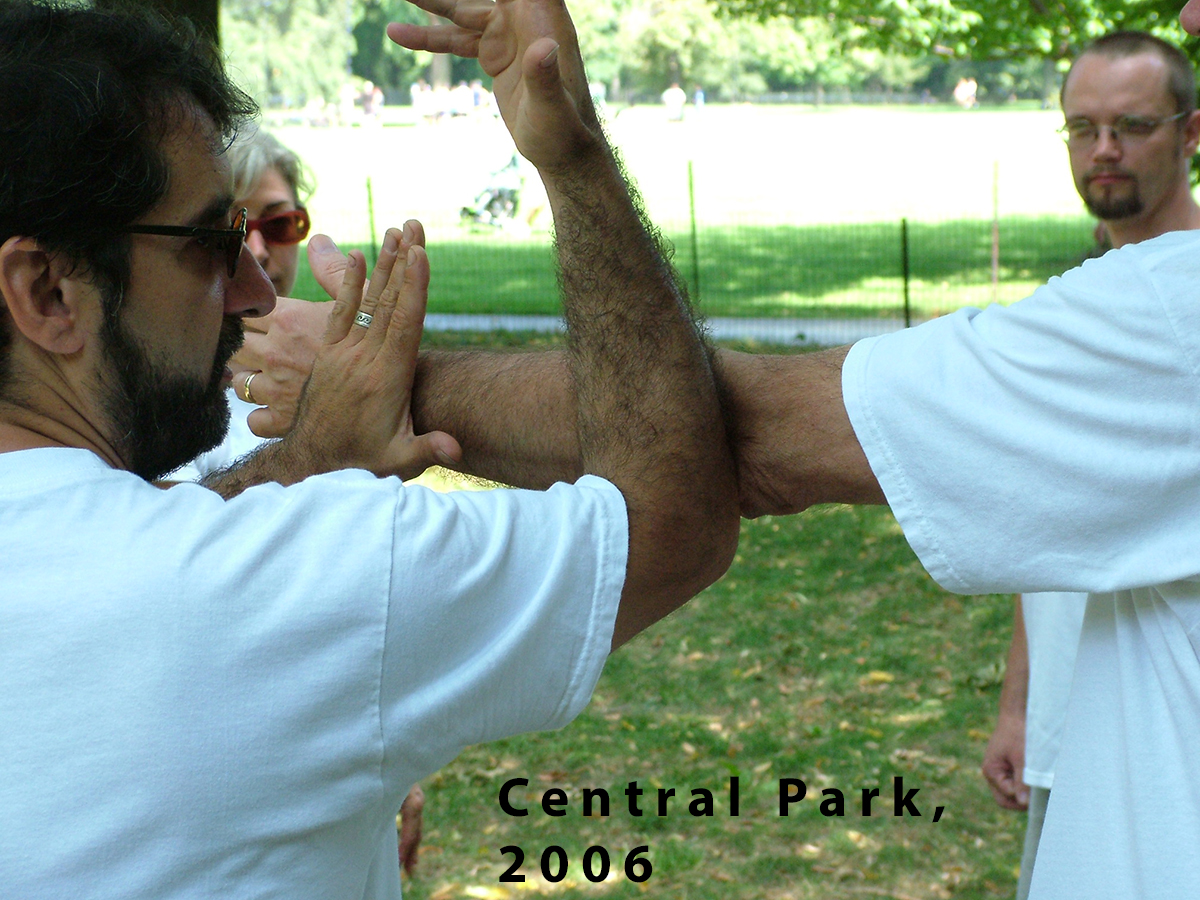
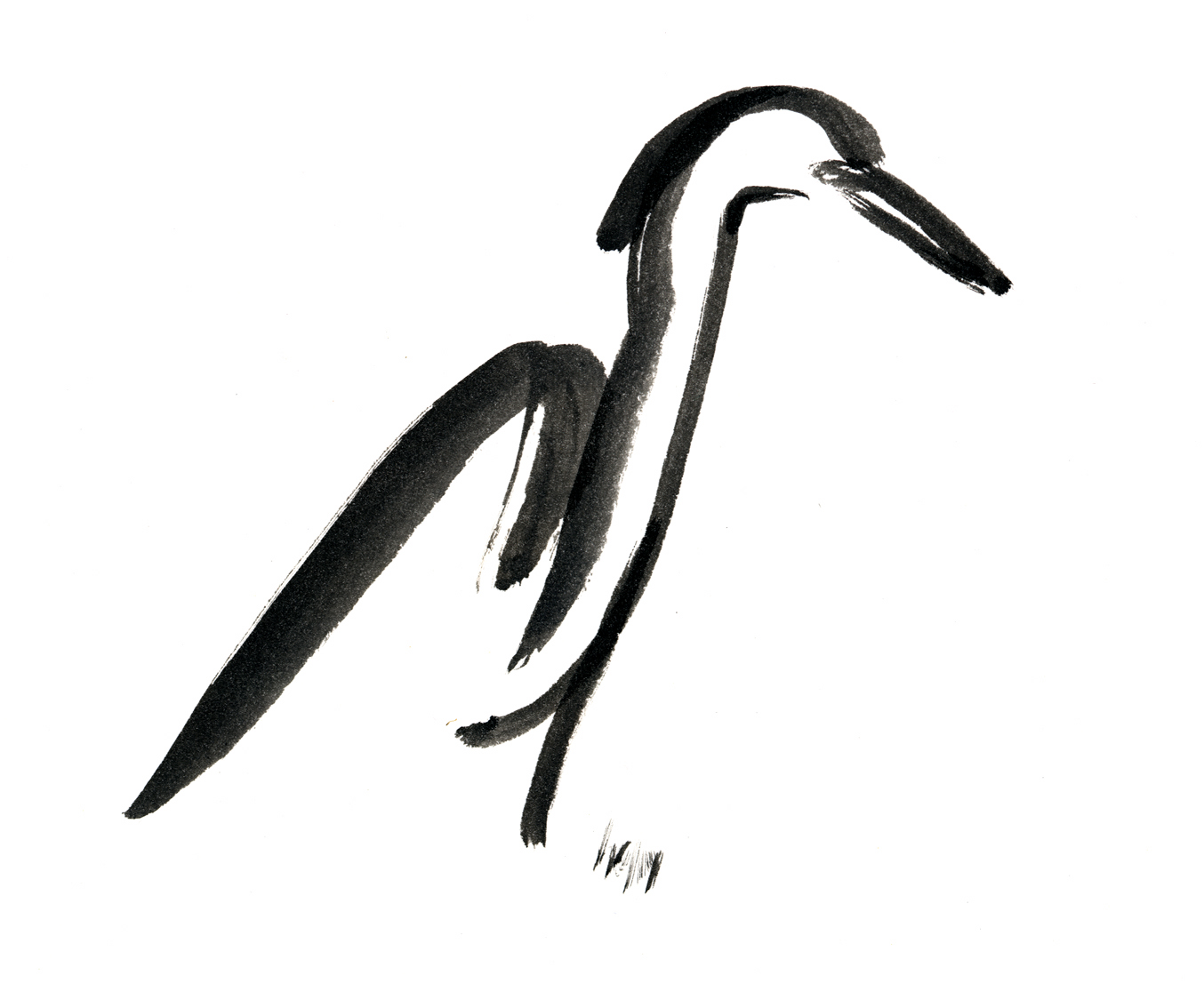
Photographs for the journal have been supplied by Mark. This installment also includes original ink drawings by Holly Leavy, which were first published in the AYMTA Journal in the late 90’s / early 2000’s when I was the editor.

Review Class

Practiced beginning Push Hands. Peng Fa Jing off the back leg, then taking a half step forward. Right hand is in Peng and the left hand deflects in an angular direction. The back leg remains in place but the front leg moves forward and back, receiving and transferring energy.

First catch the energy and throw it back (Jie Jing). If done well, the partner will jump. Feed the partner, don’t block your partner’s energy.

The back leg does not move or come off the ground. Shift the weight to thefront leg. Two half-steps back and shift the weight to front leg. Keep still and plunge down on the front leg and wait for the partner, then step back. The Peng hand is not doing the pushing. Draw the partner’s energy into nothing and catch the energy and throw it back.

Wait for the energy to come to you, catch it and sink then push from the front leg. A back-leg push is very quick. 

Look for opportunities.  The empty hand connects at the elbow. Full body pushes forward together. Try to imagine this and work on it. The Peng arm is relaxed with no stiffness.

Peng in small circles using Nei Li, being sure not to give up contact. Stay with your center and puff up the back.  Chi is circulating in all parts of the body. Stay within the chest area and not give your partner an opening. Do not move too much.

Peng Lu An Ji. First changing legs then changing arms then changing both.  You can change from disadvantageous to advantageous just by stepping back. Stepping forward doing An Lu.

The person who is deflecting, does not turn too far. If he/she turns too far then the partner may have an opening. Do not go beyond your center. It is not necessary to follow your partner too much. Don’t lose your center. It is also a waste of energy to deflect too much. Listen carefully so that when your partner changes you can change. Arms stay relaxed so you can listen to whatever is coming. Be ready to change. Arms should stay relaxed. Take the stiffness out of the arms. 

One person is in An (push) position and one is in Peng (advantageous position). The person in Peng has his/her hand on the outside of the elbow of the person in An position.

Person in Peng takes two half steps back to receive and the person in An position takes two half steps forward to transfer energy. The person in Peng grounds the energy that is incoming. Receives it, catches it and transfers it back. Don’t block the energy, catch it and throw it back. If you are practicing well, your partner might jump up when being pushed.       
Feeding your partner energy is much like throwing your partner a ball. Use the back leg to catch and use the back leg to throw and use it as a spring. Do not shift or move the back leg. 

Two half steps back and two half steps up. Sink onto the front leg. Catch the energy and then throw it back. It should be quite natural. Wait to see what the partner does. 

Yin Jing Luo Kong (Drop the incoming energy into nothingness) catching the energy. It is not a matter of how hard the incoming energy is. Be able to catch it. Timing has to be right! Adjust yourself to the energy that is coming.  Sinking on the front leg to remain stable. Your partner should not feel anything is going on. The whole body moves forward as a unit. Ground the energy that is coming. The more relaxed and natural the better.

When your partner comes at you, sink down. In effect, you are waiting for him, so sinking means waiting. Sink and extend the arm to open up the shoulder, Then, if he pushes turn the waist to yield. So, sink then turn. To yield. Sink to root the push then turn to yield to the push. For small pushes the shoulder separates from the rest of the body. But stronger pushes require then we wait.
Posted in Articles, Categories, Instructional | Tagged , , , , , , | Leave a comment

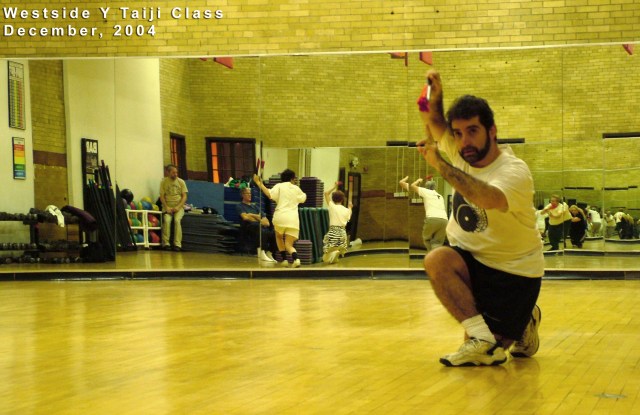
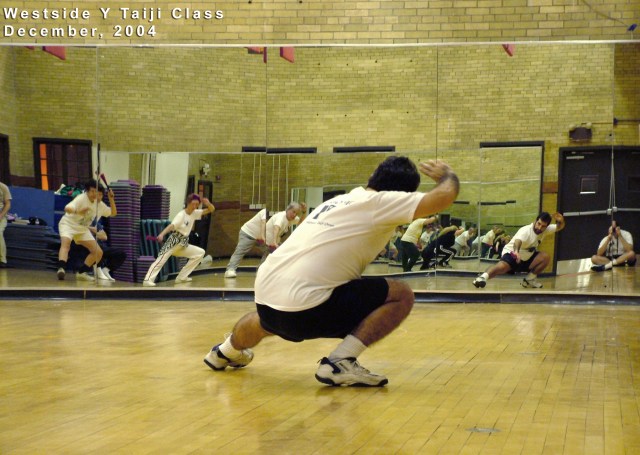
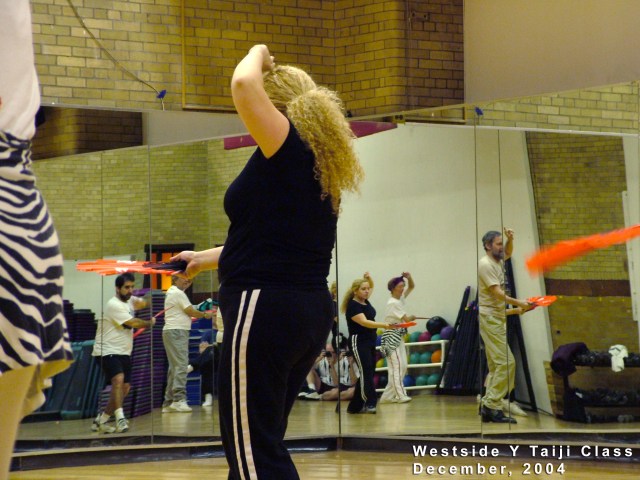
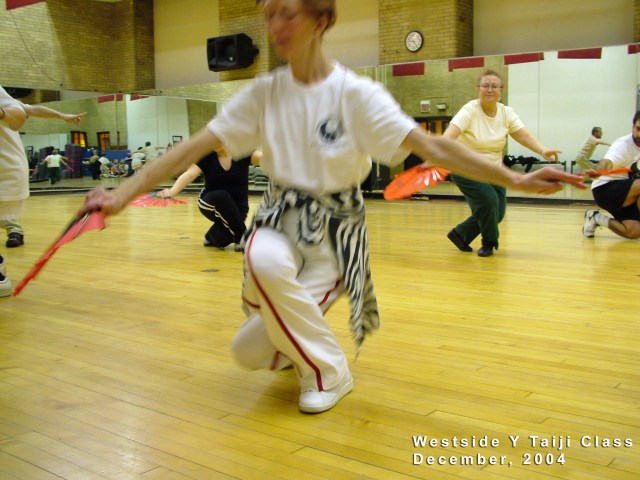
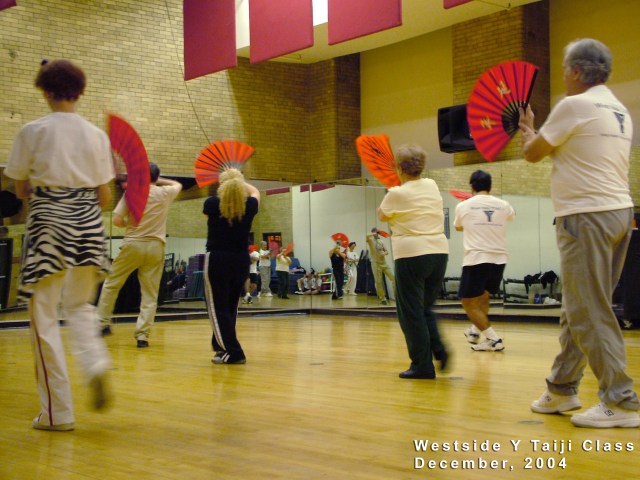
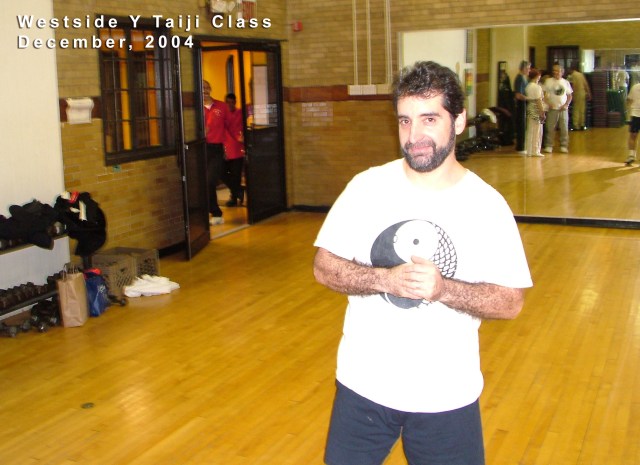
Taiji Fan at the Westside Y – December 2004

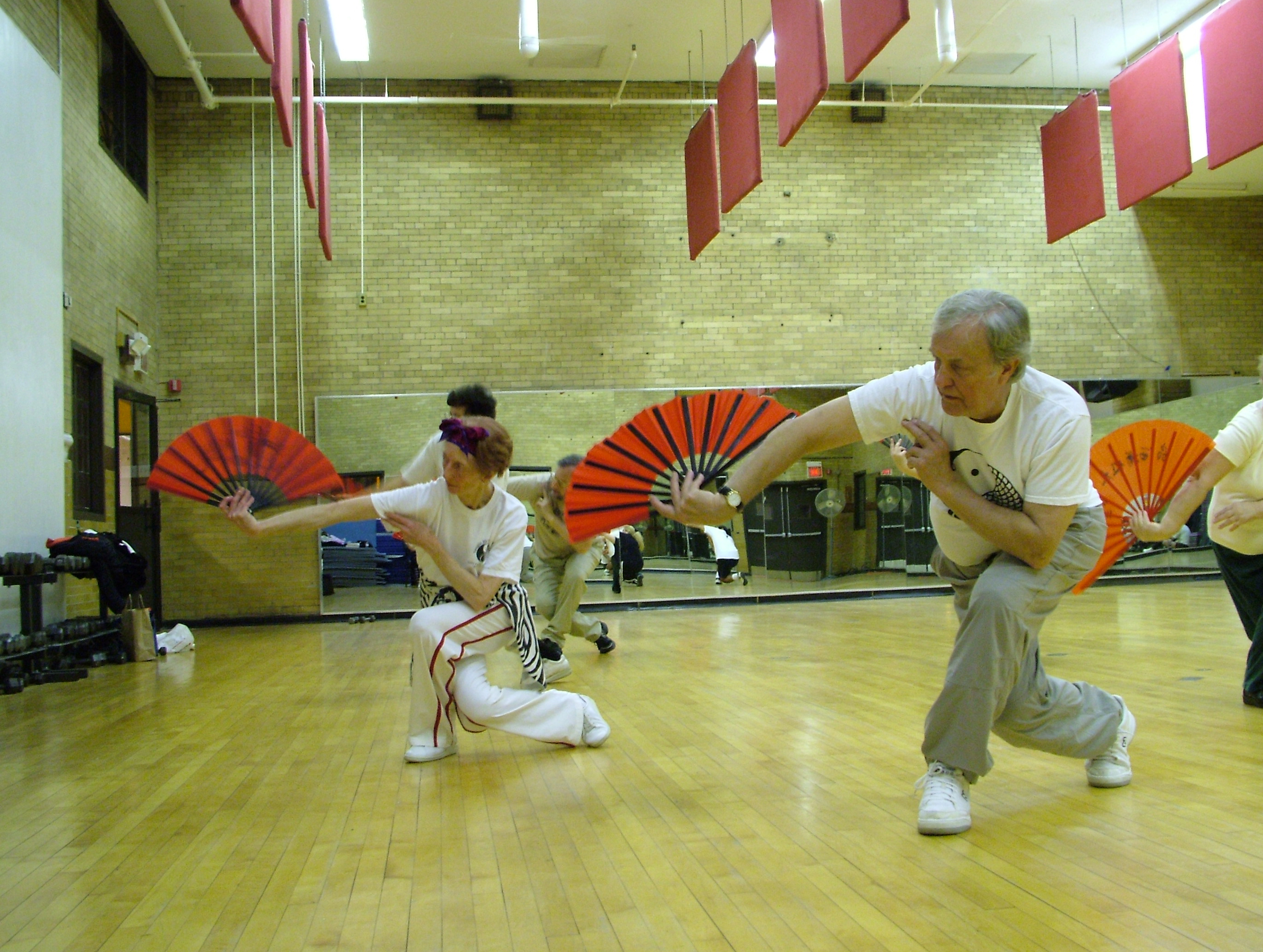
Robert Politzer taught the Yangjia Michuan Taiji Fan Form a number of times in class. Here are some images from a session on December 29, 2004. You can click through them using the arrows on the side of the images.

Posted in Categories, Photographs | Tagged , , , , , , , | Leave a comment

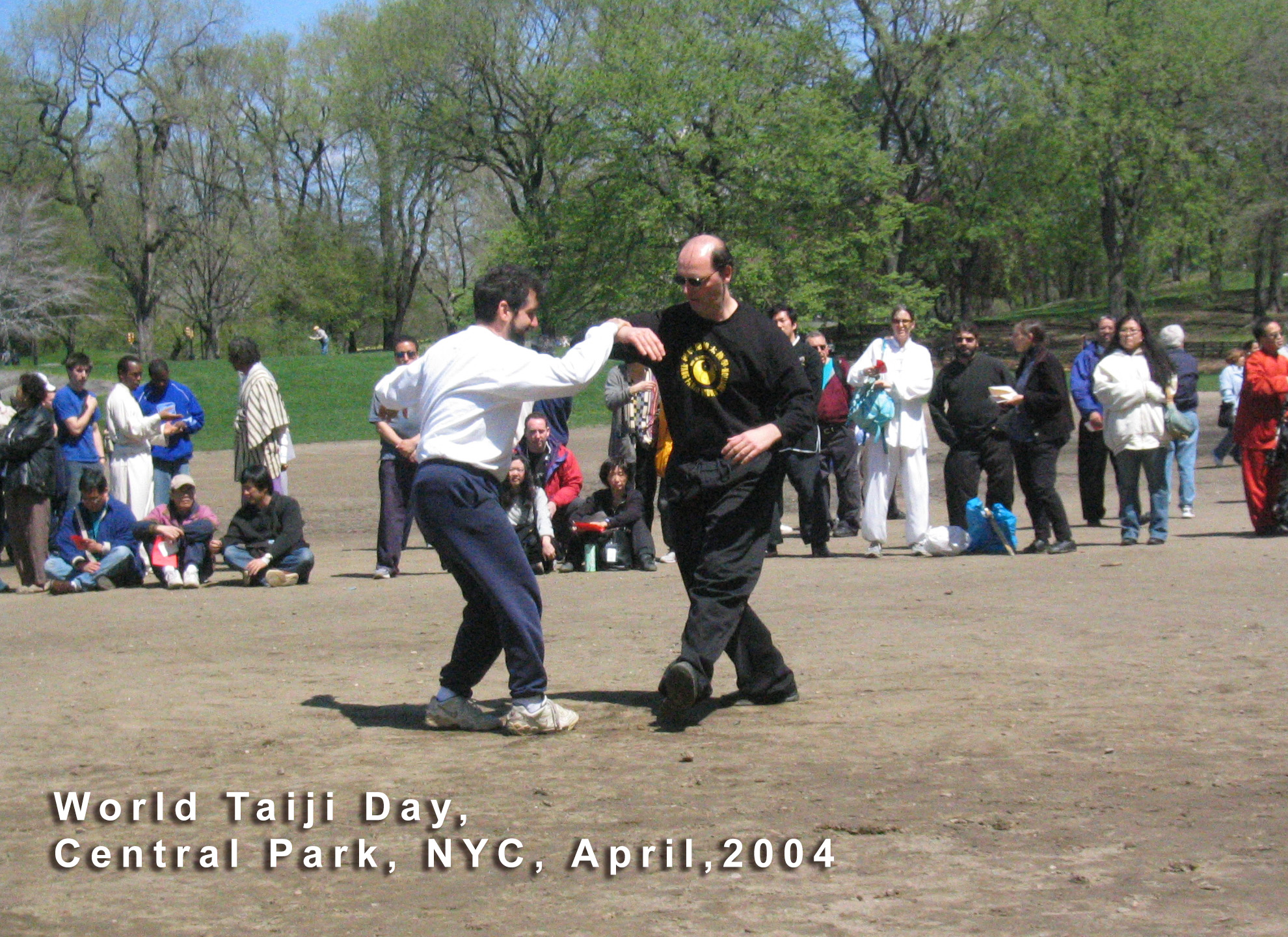
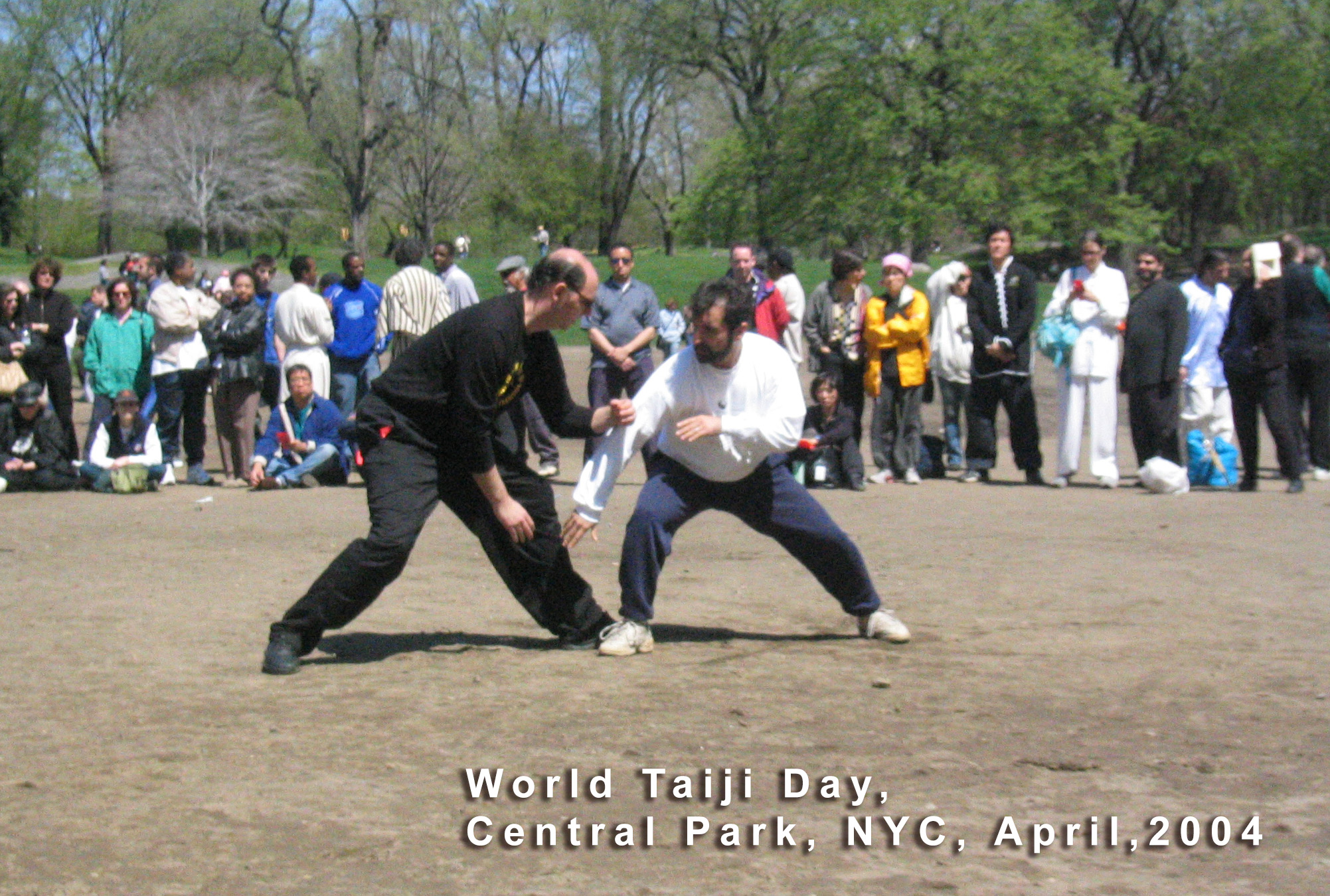
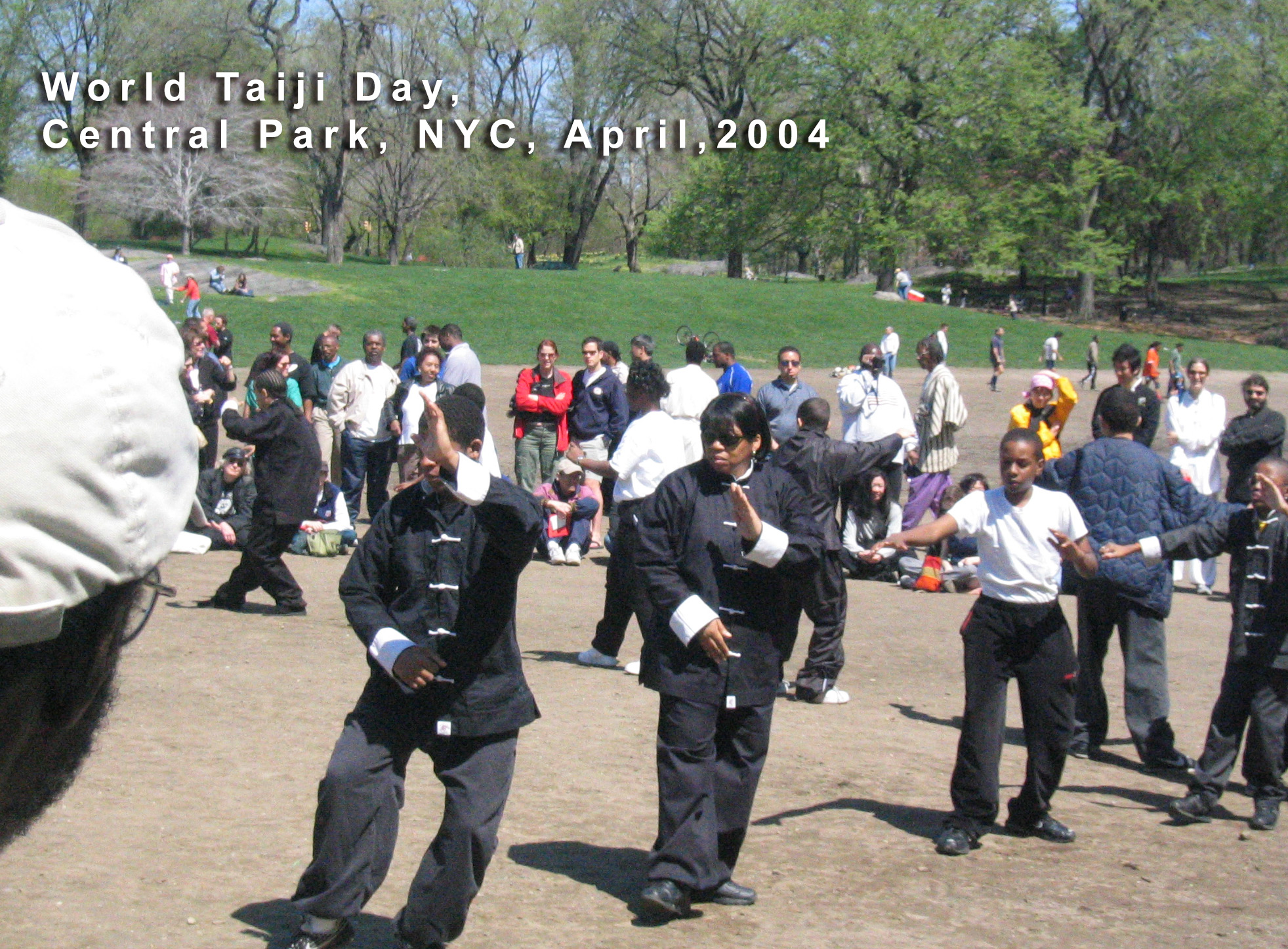
World Taiji Day in NYC, Central Park – April, 2004

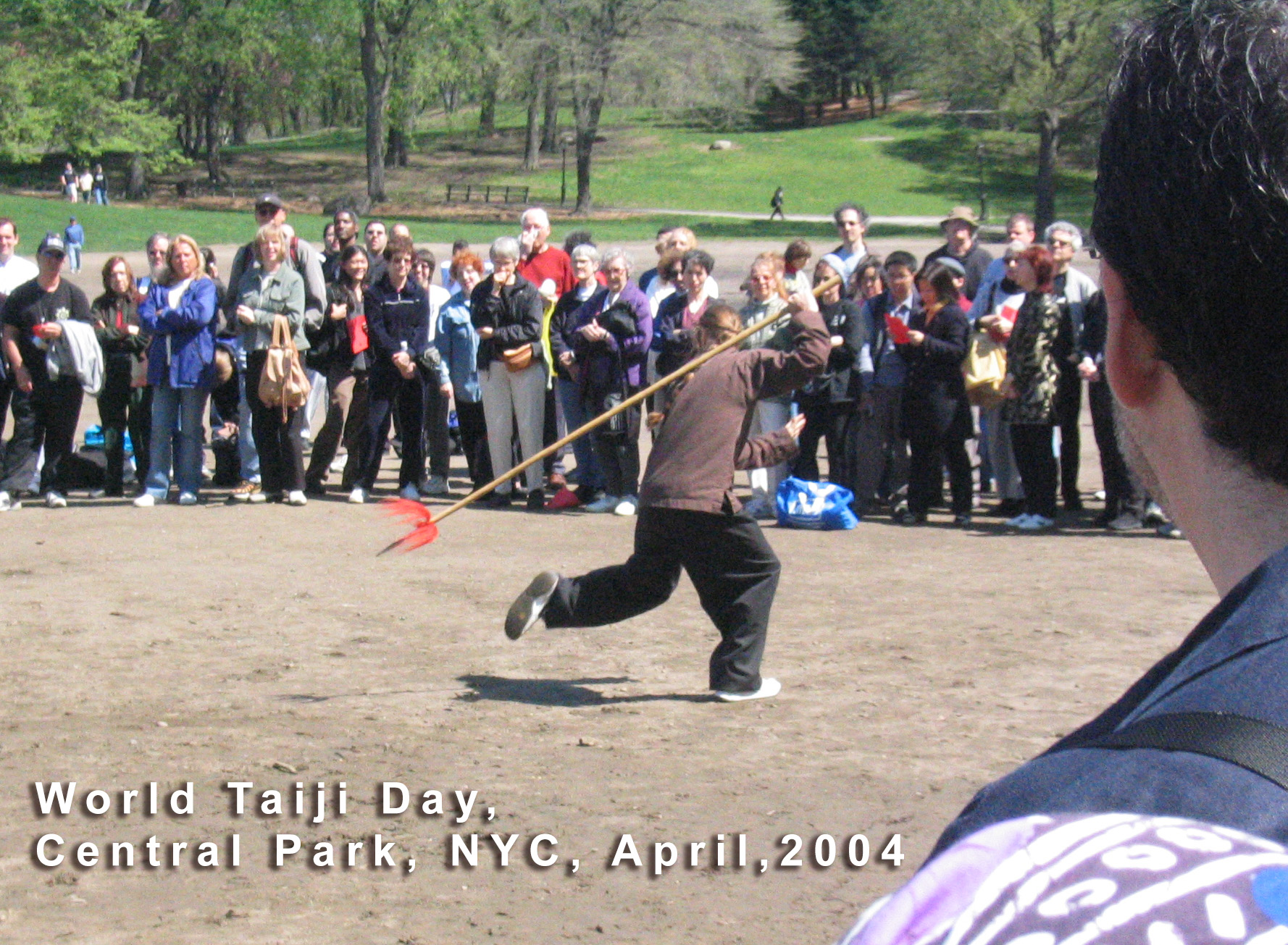
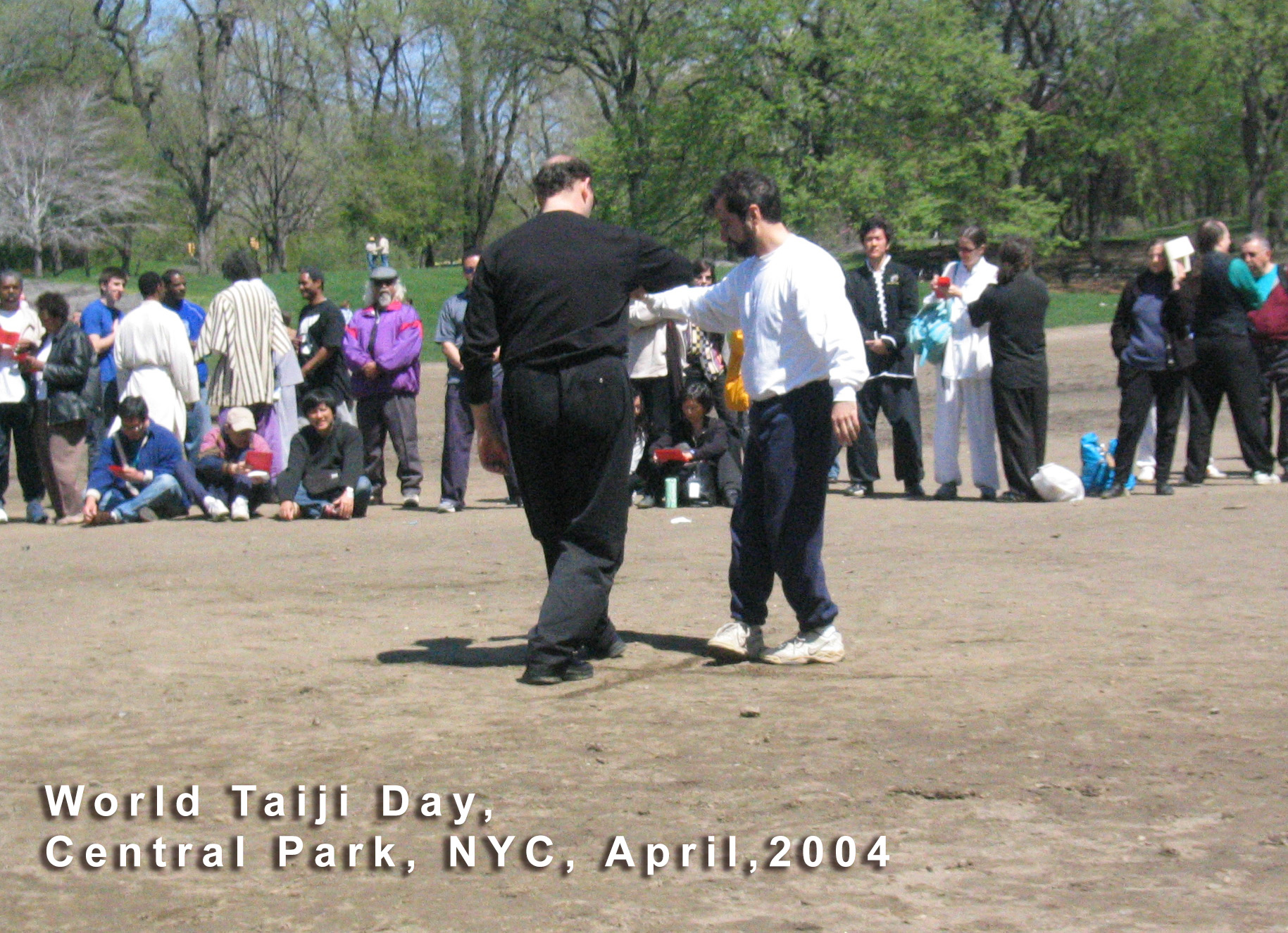
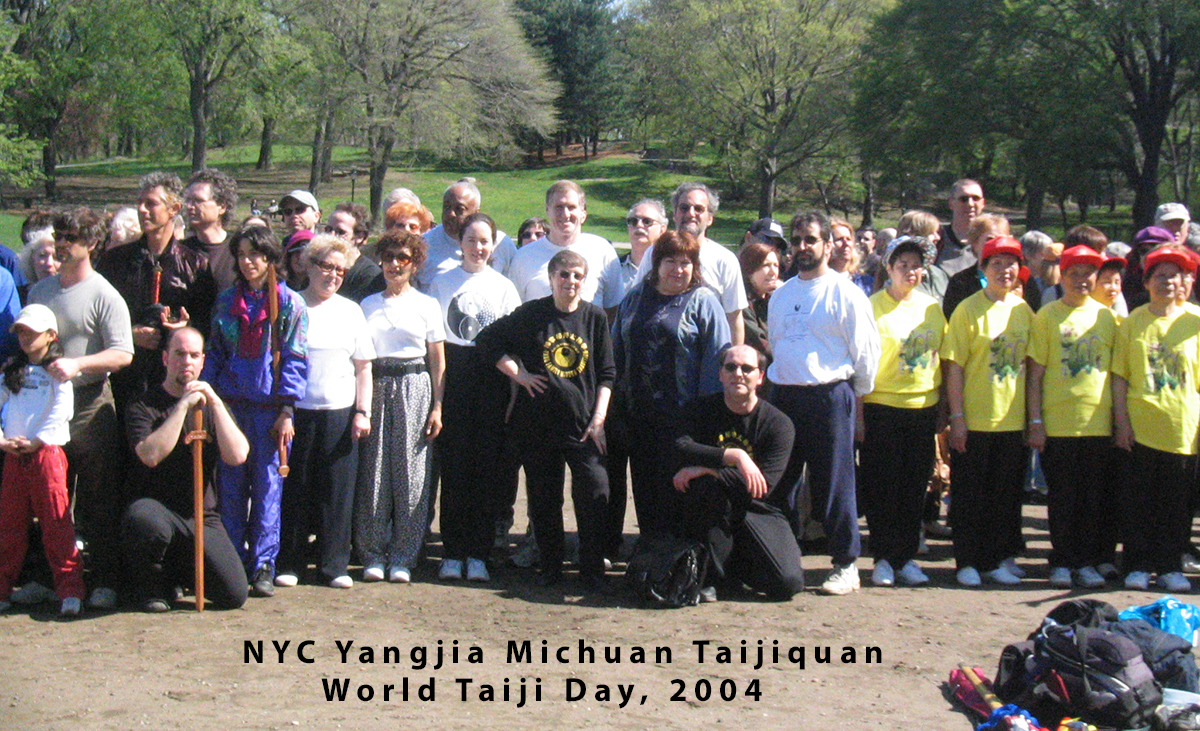
For a number of years Robert Politzer’s West Side Y Taiji class joined other Taiji schools and classes in a celebration of World Taiji Day, the idea being that people were practicing at the same time around the world. There were two or three meeting places in the city, the largest being in Central Park. Our class, like others, were invited to do a demo. For this one I joined Robert in Da Lu, one of the fifteen Tuishou exercises in the Yangjia Michuan system. I believe these photos were by my friend Holly Leavy, based on the dog in the subway photo that was part of the collection.

Posted in Photographs | Tagged , , , , , , , | Leave a comment

Yangjia Michuan Taiji: Taipei Notes and Commentaries on Tuishou by Mark A. Linett – Second Installment

This is the second installment of the notes that Mark Linett, one of the original Western students of Master Wang Yen-nien, has put together, with commentary. Mark began his studies with Master Wang in Taipei in 1982. We are honored that he is allowing the NYC Yangjia Michuan Taiji site to publish them in their entirety. There will be installments published throughout the summer and fall of 2025.

You can read the first installment, with introductory notes, by clicking here: Tuishou Notes Installment One.

Wang Yen-nien practices the Third Duan of the Yangia Michuan Taiji Form.

Fa Jing
The push comes from the Chi Hai (Sea of Chi) When pushing, relax the Weilu (tailbone) point in the lower back. 

When standing up or sittng, the back or Chi Hai pushes out with the same force as the front. This is the way to balance the forces. Breathe out as the push is applied. Yi is focused on the back. It is important not to use external Li ( hard strength). Arm is open a small bit. We are trying to achieve a unity of body and mind. One line of energy from the back leg to the waist up the back. Weilu sinks and moves forward while the Chi Hai moves back. the arms and the back create this strong egg shape. All forces are balanced. No matter whatever part of the body moves, we learn to understand where a person’s center is and where his weight is. 
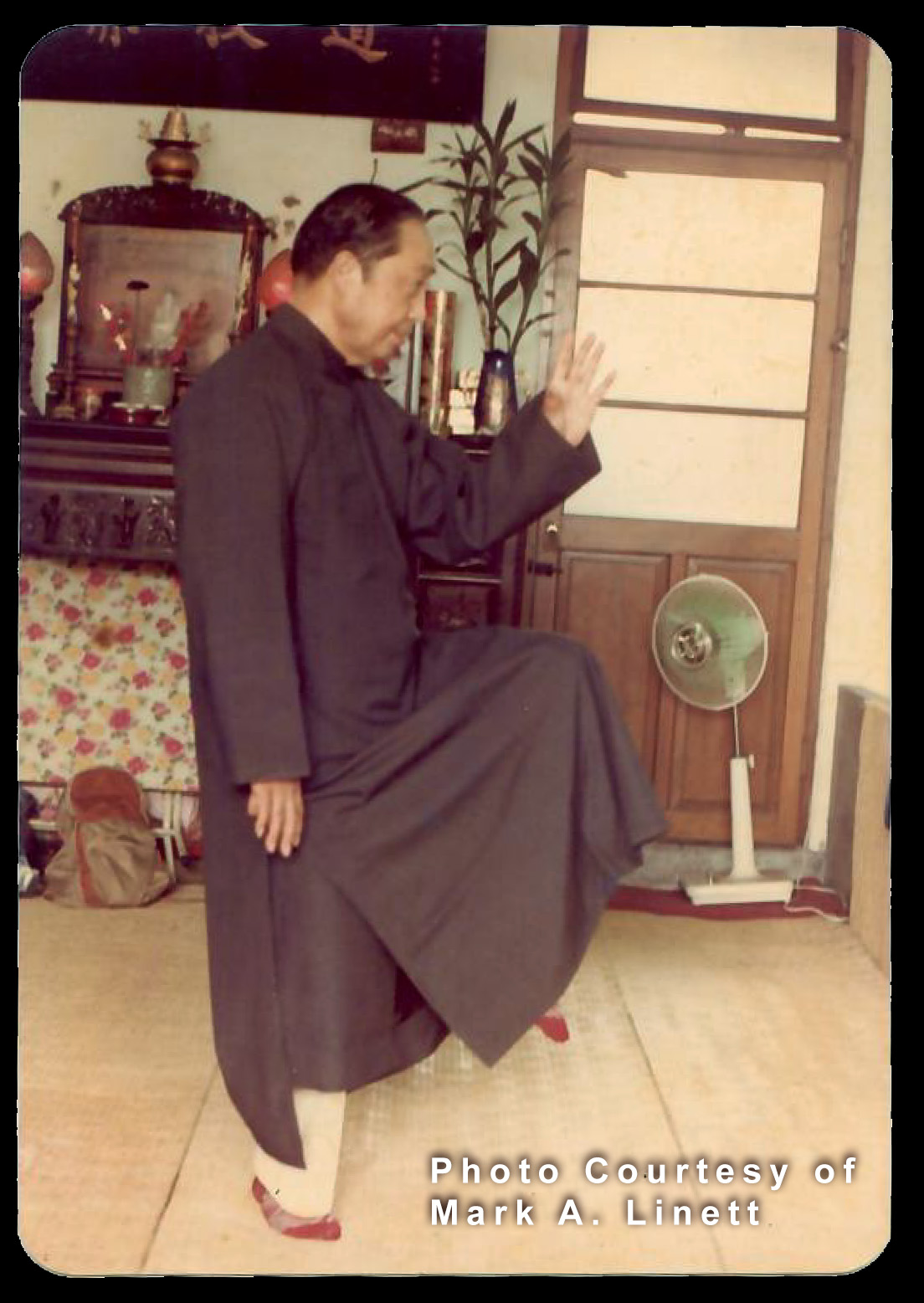
First you must have backward, and then you can have forward, first downward then upward. The elbows are not pointed out but down. The energy will be directed out if the elbows are pointed out. 
Even if one pushes straight, that push may not be effective. First, move them (often this is forgotten), then you can use four ounces to push. 
The push comes like lightning and the partner does not know what hit him. 

Relax the upper part of the body so chi can flow up the spine and out the legs. You can sink deeper into the legs if the upper body is relaxed. The back is smooth and rounded when filled with Chi, Tiger back, Bear waist

With Ji Fa Jing it is possible to create vibrating power to break your partner’s root. When doing Ji (squeeze)practice on the front and back leg with a straight push into the body of the partner. 

  1. Lu Fa jing on the advantageous side 
  2. Ji Fa Jing aQer doing the Lu to deflect 
  3. Cai Pull to the side. First pull then move the hand to the side and pull again. 

Keep empty and full (Yin and Yang) clear. The sides of the body are also full and empty. 

Pulling exercise is practicing Ting Jing, Intercept with soft energy. When intercepting, the fingers facing up, Lu (Rollback) is in contact with the arm between the elbow and the shoulder 

When practicing Lu (Rollback), pull the arm down to the side otherwise there won’t be enough room to express energy with Lu Fa Jing

If you defend with Lu and the defending partner is in the disadvantageous position, he/she can defend by stepping back, then he/she is in the advantageous position. If you defend with Lu and you are in the disadvantageous position, you can switch to the advantageous position by stepping back. 

When doing Pull Down (Cai), pay attention to which leg is full or empty. The Cai movements may seem easy to practice but by practicing Cai, it can develop Ting Jing (listening energy) which can lead to understanding Jing. If you cannot find an opening, give a tug (Cai) to find one. then give a tug (Cai)and push. When the partner falls into the void with the tug then you can push. 

Remember that the arms do not move alone but follow the waist. Open the shoulder; the partner will feel that the arm is very heavy. 

When meeting hard energy, meet it with soft listening energy turn the body naturally. When turning the body strike with the palm, and empty the waist. 

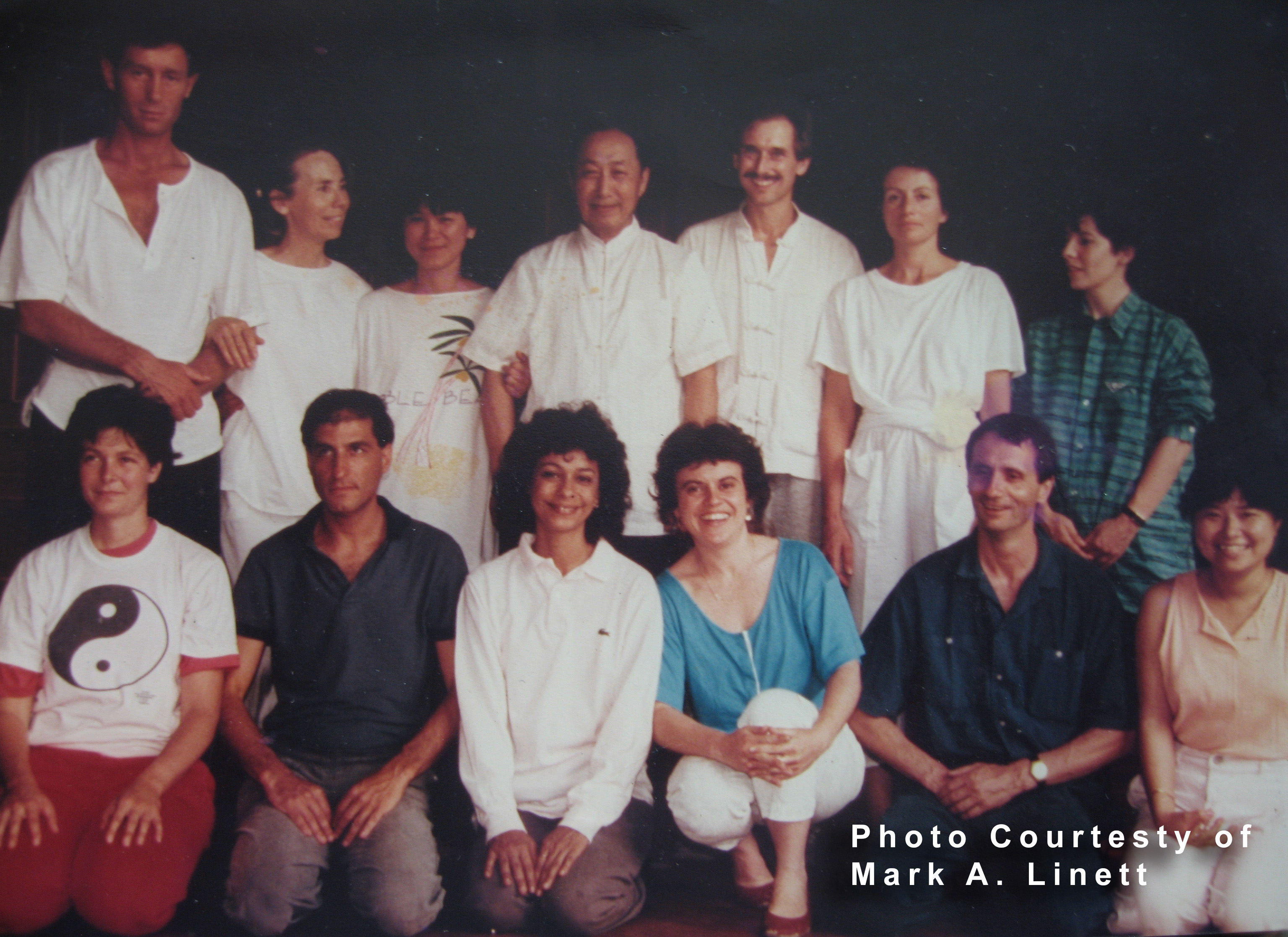
Taipei students and teachers with Wang Yen-nien.

Click on the number 2 to read the second part of this article.

Posted in Articles, Instructional, Photographs | Tagged , , , , , , , | Leave a comment

Suitable Space

We are pleased to republish this article from the Fall 2000 AYMTA Journal, which celebrated the life and Taiji of our teacher Wang Yen-nien. Peter Clifford, who studied for many years with Master Wang in Taiwan and at workshops across Europe, has taught Yangjia Michuan Taiji in London at the Tai Chi Centre since 1995. Referring to the article in a recent email he expressed “The memory of it gave me a good smile once again! How fortunate we were to have Wang Yen-nien as our teacher.” The original artwork is by Holly Leavy, who contributed much to the design and look of the Journals.

Back in the 1970’s when I started to study tai chi chuan with Wang Lao chr in Taipei, we used to go to his house in Shih Lin to practice; three times a week for push hands, and two mornings a week for form and sword. Entry to Lao chr’s house was on the busy Dadong Road, where it is now a shop. We would thread our way through the ground floor, up the stairs, through the kitchen, where Chr mou was always preparing the next meal, and then go upstairs again to the dao guan.

The dao guan was a dark and well-seasoned room, with rush tatami mats on the floor. Around the walls were vertically placed tatamis, some pictures, and a large Chinese altar. Beside the altar was a door to the toilet, inside which was a window, and a metal ladder, which went up to the roof space, where Lao chr cultivated rare and exotic plants.  The toilet door was usually kept open when the toilet was not in use. Space was at a premium, especially when there were several people practicing, and the open door gave more light and the impression of more space.

Practicing the form, in the mornings at Lao chr’s house was always a special occasion. One such occasion was on a Wednesday morning when Lao chr was practicing the form with us. Due to the lack of space when he got to the toilet door, as it was open, he carried on and moved completely into the toilet. It seemed as if he was in there for a very long time. He then re-emerged still practicing the form. When he came out it was very difficult not to roar with laughter. It happened again several times after that, and no doubt the message was that no obstacle is insurmountable, and no space is unsuitable. 

Peter Clifford, London 06 October 2000

Posted in Articles | Tagged , , , , , | Leave a comment

A Yang Family Hidden Tradition Gathering

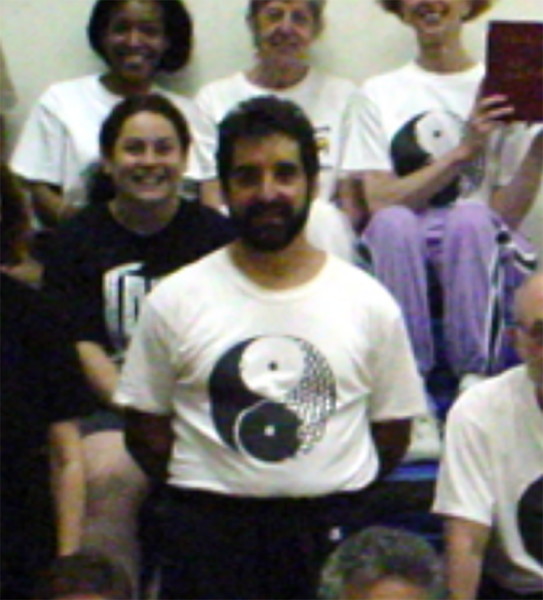
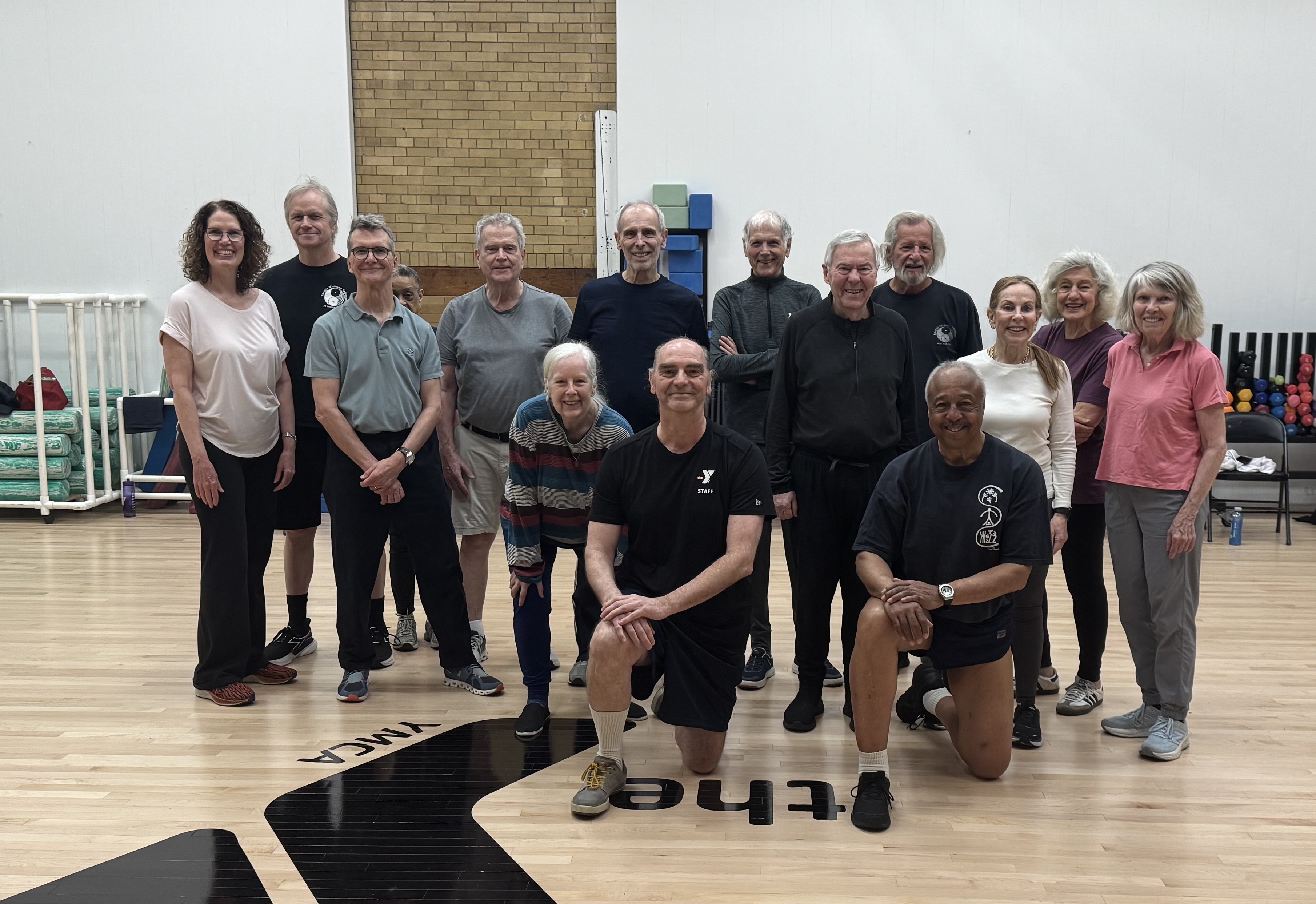
We gathered on June 7 for a festive tradition of good food, good talk, and good company. We were even blessed with a visit from the baby buddha (back to the left). Robert Politzer, who founded the school in 1994, is on the far right of the third row. Arnold Baker, who also teaches in the class, is on the far left, third row.

Posted in Photographs | Tagged , , , , | Leave a comment

Yangjia Michuan Taiji: Taipei Notes and Commentaries on Tuishou by Mark A. Linett  

Wang Yen-nien, Ward Off (Peng).

This is the first installment of the notes that Mark Linett, one of the original Western students of Master Wang Yen-nien, has put together, with commentary. We are honored that he is allowing the NYC Yangjia Michuan Taiji site to publish them in their entirety. There will be installments published throughout the summer of 2025. Below is a short note about Mark, followed by the table of contents and the first installment, which takes us into Chapter Two – Pushing Sequences. Mark is open to questions and feedback – you are welcome to leave a comment or your questions at the bottom of the page, which allows other readers to benefit from questions and answers.

Mark lives in Taipei with his wife Wendy. He began practicing Yang and Wu style T’ai Chi in New York in 1978, but was soon off to Asia to look for a teacher. 

After spending some time in India he set off for Taiwan where in late 1982 he began studying with Master Wang. He has taught Yangjia Michuan here in Taipei, as well in Germany and in the U.S and he presently continues researching, practicing and teaching Yang Jia Michuan Tai Chi Chuan.

Taipei Notes and Commentaries on Tuishou – Installment 1

                                      Contents                                                                            

        Dedication……………………………………………2

        Journal Notes………………………………………  3-10

        Pushing Sequences………………………………10-37

        Practice Methods………………………………   37-48 

        Push Hands Basic Exercises………………… 49-50

        Seven Important Tuishou Concepts………51-52

        Commentary on the Basic Exercises……. 53-72

        Looking for Opportunities…………………….72-79

       The Hands in Tuishou…………………………..  79-83

       Yi, Li and Ting Jing………………………………    83-89

       Glossary………………………………………………..90-93                    

Dedication 

These notes and commentaries are dedicated to Wang Laoshi’s teaching as well as to the teachers and practitioners who carry on and develop the practice of Yang Jia Michuan T’ai Ji Quan. 

There must be a word of deep gratitude to Wang Laoshi for his teaching. The notes certainly speak for themselves as to the depth and breadth of his teaching.

Many thanks to Julia Fairchild for her translation during the workshops and to my wife Wendy for her help in editing and translating the text into Chinese. Also, thanks to Noelle Kasai for her encouragement and advice.       

Mark A. Linett                                                                                                                                      Taipei 2023

Wang Yen-nien and students at the first Yang Jia Michuan Festival in Strasbourg, 1986.

Journal  Notes                                         

Over the years that I have practiced Yang Jia Michuan Tái Chi, I have been keeping journals with notes of lessons and comments that Laoshi made during our classes. Many of the notes were taken after I had returned home and scoured my memory for the treasure trove of wisdom and information that Laoshi gave us during our Tuishou and form classes. I have laid out the information in much the same way that I first jotted it down in my journals. Hopefully my fellow practitioners with a strong interest in Tuishou will find some use for the information in their practice or at the very least use it as food for thought. 

I will be referring to Push Hands as Tuishou. Anyone familiar with Wang Laoshi’s teaching will know that he often repeated information that was important and worth our attention.

There may be some repetition in the notes. Perhaps bear in mind that if it is repeated it is well-worth recalling and putting into practice. 

In the first section, the italicized print indicates my comments. In the second section, I will be adding my commentaries on the basic exercises and Wang Laoshi’s reflections will be in italics.

In Tuishou, as soon as the hands meet a partner, start to change. Do not stand and wait to be pushed. Use one hand then the other to push and channel energy. Hands are lively, rotating, sticking, and changing. Hands are be light and listening and work together. They are constantly listening and transforming. Allow the hands to rise and to make contact with the partner. Also, use the body to listen to your partner’s hands while looking for the partner’s center. Changes and transformation become manifest through familiarity and the movements become so familiar that the hands move without thinking. Practicing sticking to your partner and it feels like there are suction cups on your hands.

Move out of the realm of hard external strength (Li) and resistance and be in the realm of internal strength (Nei Li) and relaxation. This is the path, which leads to real Gongfu (skill achieved through hard work and practice). If you use strength and resistance, you will become strong to a point, but if you stop practicing you will regress quickly. 

Being relaxed and soft enhances yielding and the ability to deflect an incoming push. In deflecting, meet the incoming force with soft listening energy; Song (relaxation) and Ro (softness), not losing contact, absorbing and sticking.

The whole body moves together from ankle to the wrist.

Empty, and entice your partner to fall into the void, temporarily losing balance and root. Be ready for that moment.

Being out of breath indicates the use of Li (external strength) rather than Nei Li (internal strength). There is a limit to hard strength but there is no limit to internal strength

The partner feels controlled even without being pushed. Start to build a web from where your partner cannot escape. You are controlling him/her. As soon as there is a break, energy can be expressed (Fa Jing). Keep the heart and mind on the straight.

Sticking is soft, with no resistance or use of hard strength. Use the mind and chi and when pushing, look for the straight line into your partner’s center*. 

*Connecting to a person’s center requires a degree of listening skill, as well as a fair bit of experience and practice. With the first push one rarely finds the center of the partner. It requires several pushes. Laoshi often spoke of a soft agile hand on the body of partner; with a soft hand one can gently find the center of the partner. This is the moment of opportunity to push. The idea is to continuously search for the partner’s center, looking for opportunities and not to push before finding one.

Using Li (hard strength) is going off on a tangent. Outside is soft, calm and relaxed. Remove Li (hard strength) from your vocabulary. Nel Li (Internal strength) comes from the Dantian and the whole-body channels energy.  The arms and waist move as one. With the waist moving and turning, naturally, circularity will appear. The chi and the body become like a ball with the Dantian as the center. All movements are circular with the upper and lower body working together.

Keep the chi in the Dantian and move the chi to the point where you come in contact with the partner. The chi is flowing in a circle. Moving slowly is OK, but do not stop or break the flow of chi. He compared the flow of chi to a tornado. It moves in a circle with no stopping. Even breaking your partner’s root is done with a circular movement. Use Yi (mind intent) to lead the Chi. Chi leads the body.

In April of 1993 Laoshi taught a class in which we practiced rooting. During this class students were first asked to push at the Dantian of our partner and then at the Ming Men*

* (A gate where energy Yuan Qi, (Prenatal Chi) is stored. It is located between the kidneys in the lower back in a direct line from the Zhong Dantian, (Middle Dantian).

Wang Yen-nien, The Golden Rooster Stands On One Leg.

Click on the number two to read the second part of this article

Posted in Articles, Instructional, Photographs | Tagged , , , , , , , , | Leave a comment

Yang Family Hidden Tradition Class – May 10

Here is a moment from a recent Yangjia Michuan Taijiquan beginner class at the West Side YMCA in NYC.

Posted in Categories, Photographs | Leave a comment

May 7 YMT Teacher’s Gathering in NYC

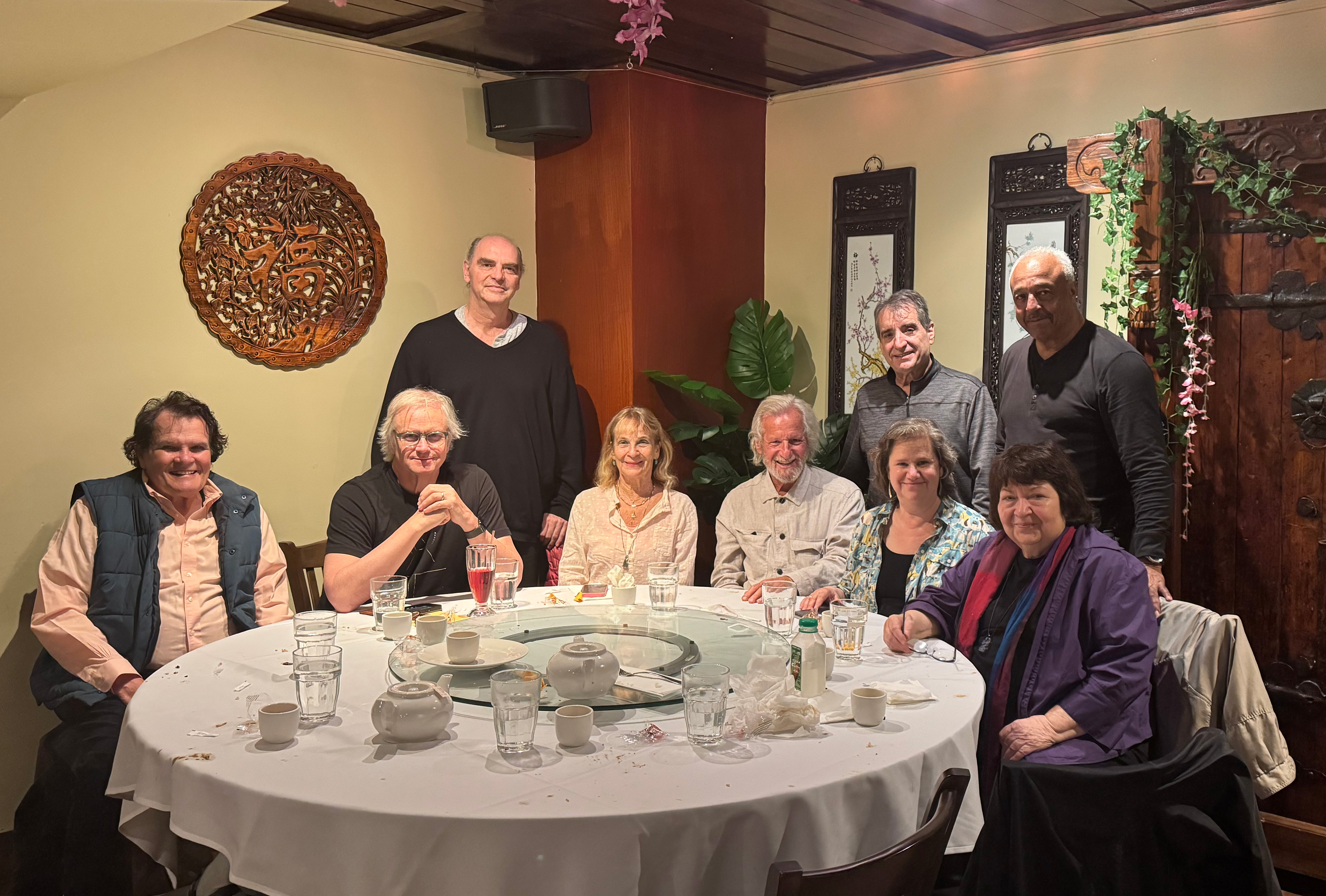
It was my birthday, which nicely coincided with a chance to gather with senior students and teachers for a lovely mini banquet. Banquet Bob already has plans for an early June banquet for the Taiji Group so looking forward to continuing the tradition with students and teachers.

Posted in Photographs | Tagged , , , , | Leave a comment

A Link To Our May 2021 Virtual Taiji Class

You can click on the image to go the Virtual Class page to view and practice Basic Exercises, the Thirteen Postures and Part One (The First Duan) of the Long Form. There may be a visit by Saphire, the lovely cat… Enjoy!

Posted in Film and Video, Instructional | Tagged , , | Leave a comment

Yangjia Michuan Taijiquan Class – Saturday, March 1

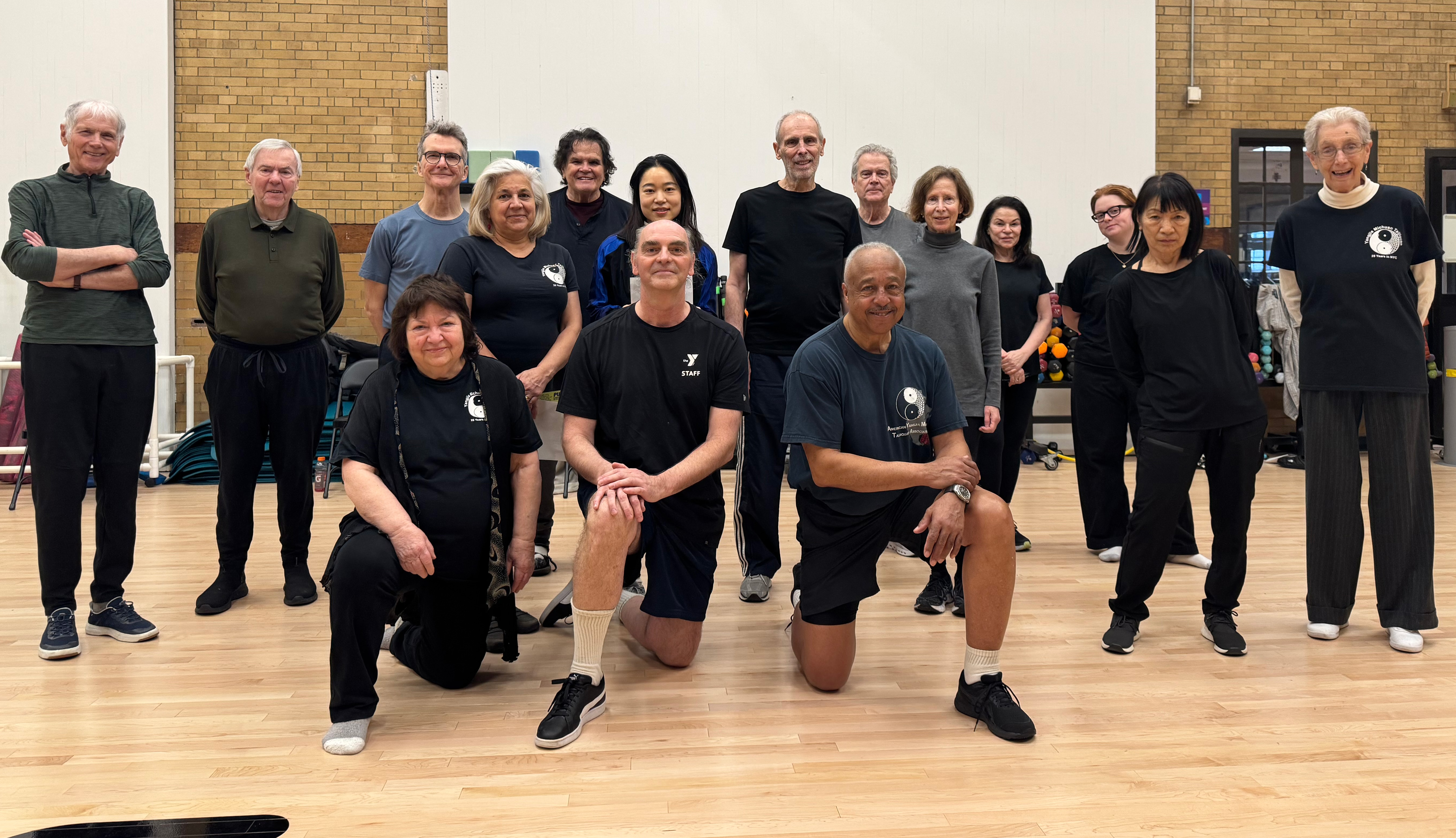
Illana, Tom and Arnold with students in our recent Introductory Yangjia Michuan Taijiquan class at the West Side YMCA in New York City.

Posted in Photographs | Leave a comment

Madison, Wisconsin Yangjia Michuan Taijiquan Workshop with Wang Yen-nien – 2002

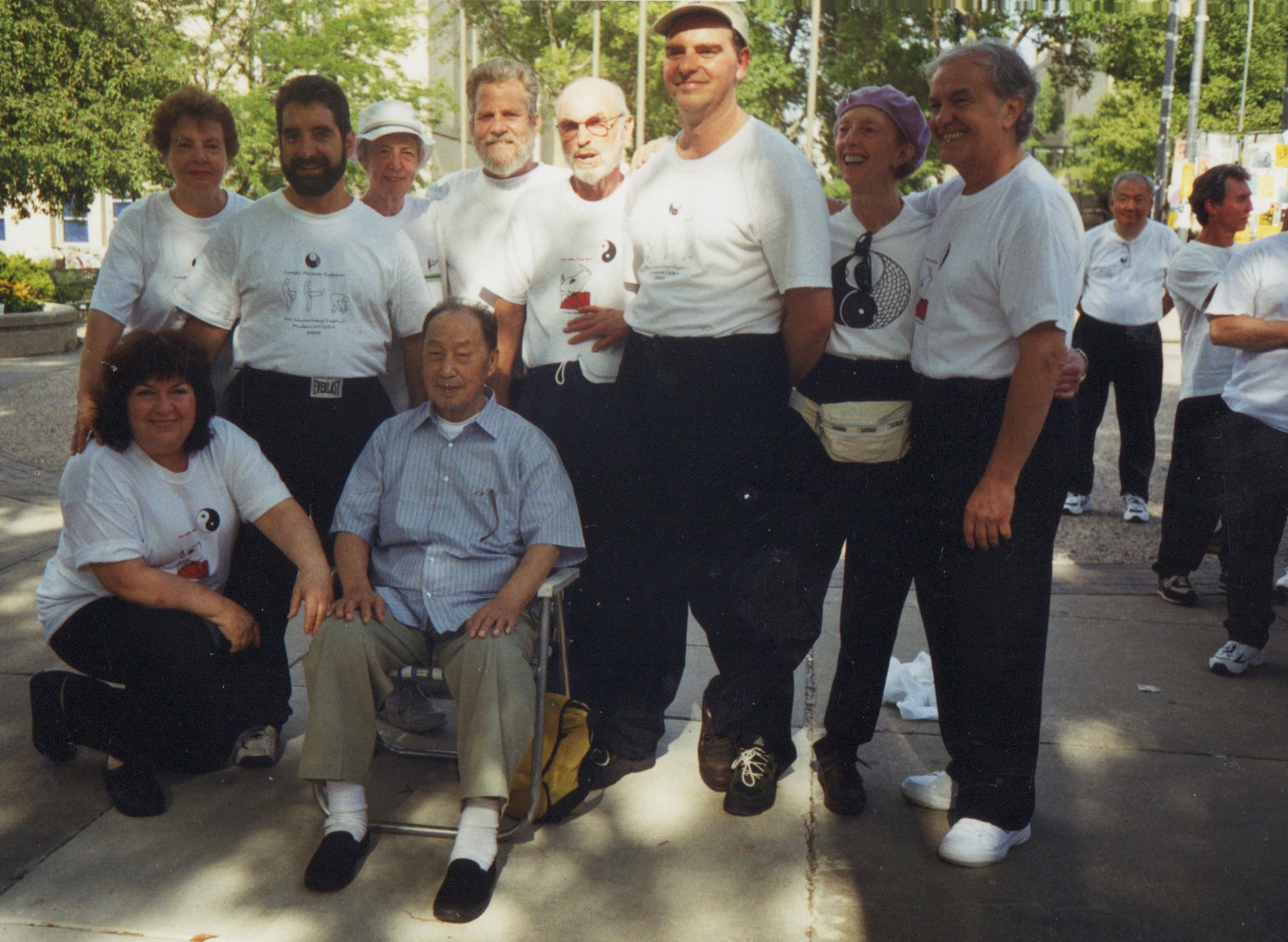
Some of the New York Contingent takes a break with Master Wang Yen-nien

Front Row: Illana, Master Wang. Back Row: Charlotte, Robert, Unknown, John, Henry, Tom, Gretchen, George.

Posted in Photographs | Tagged , , , , , | Leave a comment

Taiji Class Banquet – Dec 2, 2023

Again, Legend 72 is the right place to be. Thanks to Richard for this one…

Posted in Categories, Photographs | Tagged | Leave a comment

Three Yangjia Michuan Amigos

Arnold C. Baker II, Robert Politzer, Thomas W. Campbell

Posted in Photographs | Tagged , , , , | Leave a comment

From the pages of AYMTA

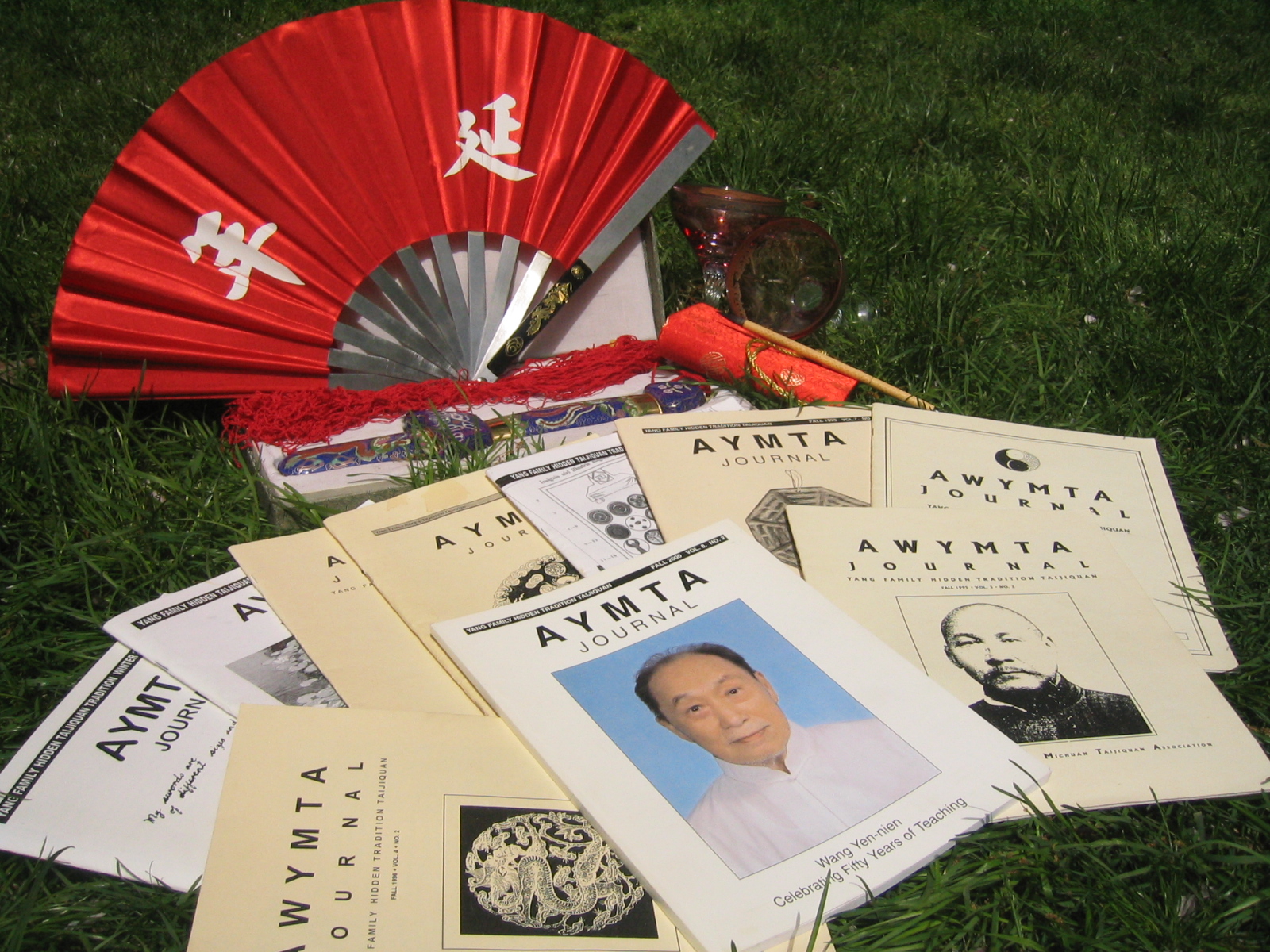
I found the color image of the cover of the 2004 journal celebrating 20 years of the Taiji Organization. The characters on the fan are Master Wang Yen-nien’s name and also mean “long life”.

Posted in Photographs | Leave a comment

YMT Class at the Y – February 2018

Posted in Categories, Photographs | Leave a comment

An Excerpt from the Winter 2001 AYMTA Journal

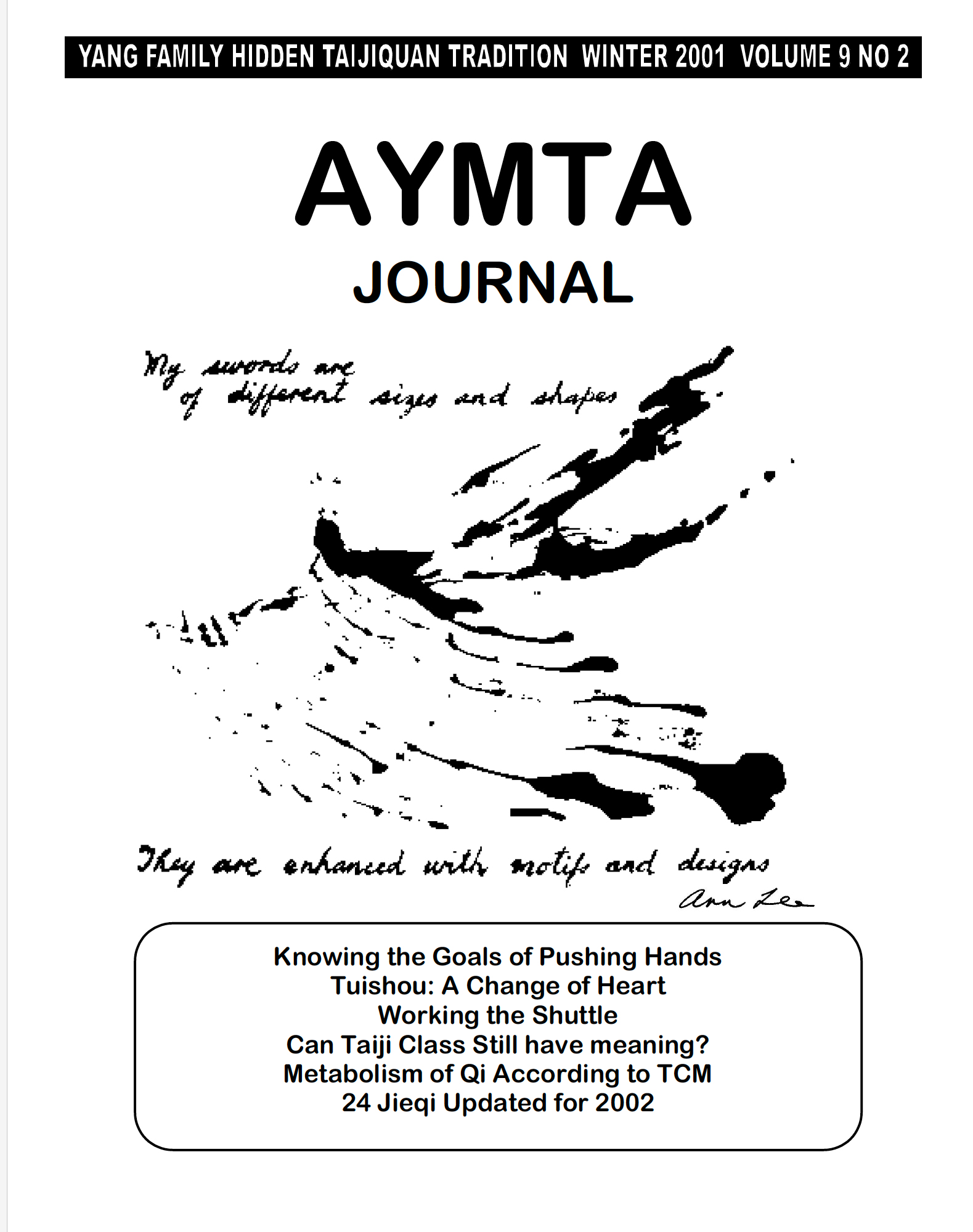
AYMTA (The American Yangjia Michuan Taijiquan Association) was founded in 1992 to help pass along and keep alive the teaching of Master Wang Yen-nien and Yangjia Michuan Taijiquan. I was involved with the organization and the journal for a number of years and will continue to post excerpts from the journal.

There are a number of articles related to the New York school in the Winter 2001 issue. Below is one, which is based on a workshop that the NY School, led by Robert Politzer, was blessed to hold – two weeks with Master Wang and Julia Fairchild in the summer of 1996.

Posted in Articles, Categories, Instructional, Photographs | Tagged , , , , , , | Leave a comment

Summer YMT classes

A few notes about the classes at the YMCA and Taiji in general. And a small movie note…

The YMT classes at the West Side YMCA are Saturday mornings beginning at 9:00 AM. We are teaching basic exercises and the 13 postures in the beginner’s class. In the Intermediate class, which runs from 10:00 to 10:45, we are doing the First Duan, part three of the 13 postures, introducing the Second Duan and also introducing the Fan form. We have added a beginner’s class on Tuesdays from 1:00 to 2:00 PM, beginning in April of 2024. It’s a lot and, with the strange weather, we won’t be going outside after the second class. Currently we are alternating Second Duan and Fan each week.

There will be no class on Labor Day Weekend.

I’ve been asked about Yangjia Michuan videos and other learning materials. For learning and to document history I will continue to post images, links and text about Yangjia Michuan on this site. Unlike when we began in the early 1990’s with Robert’s first class at the YMCA, there is now a great deal of information about our Taiji School on the web. You can search any or all of the following for useful links that teachers and students have posted for the benefit of all: Wang Yen-nien, Yangjia Michuan Taijiquan, Yang Family Hidden Tradition, Yen-nien fan form, etc. You’ll find a wealth of text, video, images etc.

Lastly, I have just finished a film I shot in 2006 about the The Movie Place, a fixture of the video and DVD rental community on the Upper West Side. It took a while to get to – feel free to check it out at this link: Watch Movie Place Film.

Posted in Articles, Categories, Film and Video, Photographs | Leave a comment

Some Learning Links for Students and Teachers of Yangjia Michuan Taijiquan – Thirteen Postures and First Duan

On this and other pages I will be updating and adding links to videos and other material that will help as you study and learn Yang Family Hidden Tradition Taiji. Also useful for those who teach and wish to review their practice. I’ll update this page as we go along. If you are studying in a class or with a teacher these links will be especially useful for you to review what you have learned so far.

Here is a link to the learning page I posted a while ago on this blog: Taiji Study aids.

Below is a list of the upper and lower body movements and positions and the basic movements of the Thirteen Postures:

Click on the image below for a video of Teacher Hervé Marest demonstrating the movements of the Thirteen Postures.

Below is a link to Nicole Henriod’s teaching video about the 13 postures.

Below is a video of Hervé Marest demonstrating the First Duan (Part one of the long form). Click on the image to watch the video.

Before practicing the taiji form (or weapon’s forms) we always do leg massages and a number of the basic exercises. The YMT form is challenging and being loose and limber before practicing is always the best way to go.

Below is a link to Master Wang Yen-nien, who taught for over fifty years, demonstrating the exercise “Bend forward from the waist”, one of the core basic exercises that we practice.

Click here for Bend Forward from the Waist video.

The Long Form of Yangjia Michuan is an hour long and is in three parts. Traditionally, after learning the Thirteen Postures, known as the Introductory Form, students will begin to learn part one (the first duan) of the long from. Part one takes about 10 minutes to do from start to finish.

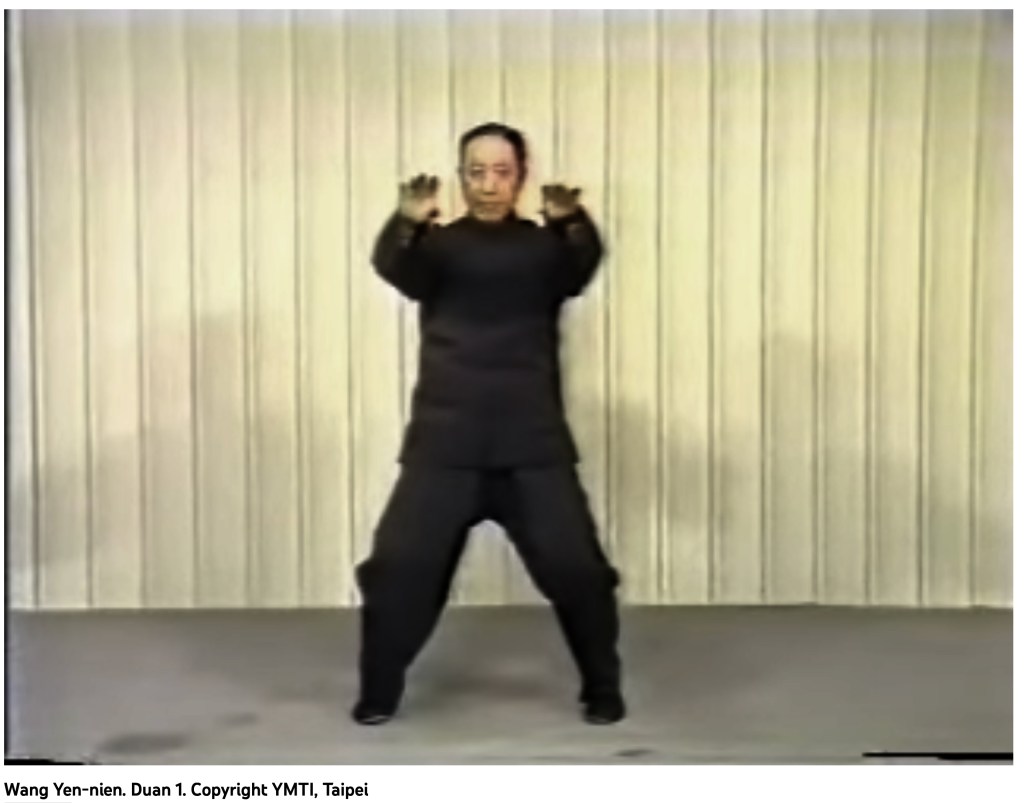
Click on the picture of Master Wang to watch a video of him demonstrating the First Duan.

Click below to watch Wang Yen-nien Demonstrating the Second Duan of the Yangjia Michuan Taiji Form.

Posted in Articles, Film and Video, Instructional | Tagged , , , , , | Leave a comment

The AYMTA Journal

AYMTA (the American Yangjia Michuan Taijiquan Association) was founded in 1992 by Wang Yen-nien, Akai Jong and Julia Fairchild as a way to help develop and teach YMT in the States. The Journal was published for many years and I was part of both endeavors for a while. As I come across old issues of the Journal I’ll publish a selection of the wonderful taiji writing and images that filled it. The 12th anniversary issue, published in 2004, is a good place to start. We spent a long summer putting it together from new writings and many thoughtful articles from past issues. More to come…

Posted in Photographs | 1 Comment

Taiji Fan on December 29, 2004

Robert Politzer teaches Taiji Fan in the big room at the Y on the last Wednesday evening of 2004.

Posted in Photographs | Leave a comment

A 2018 Taiji Visit

YMT Taiji Master George Lin was in the city and stopped by class to practice and answer questions.

George Lin was a student and friend of Wang Yen-nien. He met Robert Politzer many years ago in Taiwan and they have remained close friends. We were all honored with his presence, knowledge, and willingness to share deep skills and experience with us on this September, 2018 Saturday.
Posted in Photographs | Tagged , , , | Leave a comment

Happy Taiji New Year for 2023

Hi all,

Happy New Year to all the YMT family of teachers and students!

The West Side YMCA classes will meet for a final time this year on Saturday for the beginner’s class and then some informal first duan in the mind body studio.

Am happy to say that the Y is giving a chance to expand the Saturday class. Attendance for both classes going forward will determine if we get to keep the new hours. 

Starting Jan 7 2023, the schedule for the Saturday morning class will be:

Beginners and Intermediate
9am to 9:55am
Group Exercise Studio (The big room)

Intermediate (Beginners welcome to follow along)
10am to 10:45am
Mind Body Studio (The small room)

Cheers,
Tom C.

P.S.

Here is a link to the Yangjia Michuan Taiji study aids I put up 9 years ago – including a few updates.

And here is a link with some articles about Taiji and Health.

And here is a link to a small selection of books that I have enjoyed about Taiji history and practice.

And here is a link to Gretchen MacLane’s article about Yangjia Michuan Taijiquan in NYC. Gretchen was one of the founding members of the New York YMT Group and, along with Arnold Baker and myself, one of the first teachers to come from Robert Politzer’s 1994 class at the YMCA.

Moving through Space with Grace and Balance.

Posted in Articles, Photographs | Leave a comment

Taiji Fan in Central Park – 2022

After the 9:00 AM Taiji Class at the West Side YMCA, weather permitting, we go to Central Park and review the YMT Fan Form. At times we also do the Second Duan of the Yangjia Michuan Taijiquan Long Form. Here are a few pictures of some of the hearty group.

Posted in Photographs | 1 Comment

Yangjia Michuan Taiji Fan Form Practice – 2004

Gretchen MacLane, (Banquet) Bob Simon, George Vlachos and others in
Robert Politzer’s Fan Class in the “Big Room” at the West Side Y. Photo by Thomas W. Campbell
Posted in Photographs | 2 Comments

A Year of Virtual Taiji (April 2020 to May 2021)

May 8, 2021.
Here is the video of our last official virtual class together. The date on the video is wrong – it is May 8, 2021. It does not include leg massages. It does include Intros, Basic Exercises, 13 postures, First Duan, and some discussion of a section of the First Duan. I moved the First Duan discussion to the end so that 13 postures and First Duan flow together.

Big thanks to Robert Politzer and Master Wang Yen-nien for their teaching and inspiration, to our fellow teachers Arnold Baker, Gretchen MacLane, Ilana Shienman, and Lisa Birnbaum and to Bob Kinkel for all of his invaluable help. And to all of the “West Side Y” Class – past and present – for being such a great group! Enjoy – feel free to contact me @ tomwc@me.com

Thomas W. Campbell

Posted in Film and Video, Instructional | Tagged , , , | Leave a comment

Another Successful Taiji Banquet – October 30, 2021

After 27 years as a New York Taiji group we know how to enjoy a good meal and have a fun meetup! The New York Yangjia Michuan Taiji group, founded by Robert Politzer in the spring of 1994, had a great lunch at Legend 72 – continuing a time-honored tradition of friendship, tasty food, and cheerful storytelling. Classes continue at the West Side Y on Saturday mornings and virtually with Robert on Monday evenings.

Posted in Photographs | Leave a comment

Taiji in the Park July 17 2021

We’ve continued to teach and practice Yangjia Michuan Taiji together and are all working together to help get through this. Robert continues to teach his virtual meditation taiji class on Monday evenings, Lisa is meeting folks in Central Park for an informal practice on Wednesday afternoons and the Saturday 8:45 in the park is still happening on a weekly basis.

Here is a recent group shot inspired by Melba’s trip back to NYC and below is a lovely note she sent to all of us.

Stay healthy and keep practicing taiji.

Dear Tom, Robert, Arnold, Alana, Lisa and all of my dear YMCA family. 

I am very happy living in beautiful Ft Lauderdale where I hope all of you will visit me sometime in the future. 

When I started my massage therapy degree program in 2015, a couple of my professors encouraged all the students to learn Tai Chi. They explained how learning Tai Chi willhelp us train our bodies to utilize all of the massage therapy techniques without causing harm to our own bodies. We learned how to move and balance ourselves between the natural opposing forces of yin and yang and the external elements of earth, fire, water, wood, and metal.

At first I cringed at the idea of being in a class at 9 am on a Saturday. So I went to Robert’s Tai Chi class on a Wednesday to check it out.  I was immediately mesmerized  by the meditative unison of the instructor and the students. It was the advanced class so naturally there was no way I could follow along. But something in my whole being told me I had to learn this. So I showed up to Tom’s beginners class on a Saturday morning and felt like a cat or a dog chasing my tail as I struggled to follow the group. I was so relieved when I was sent to the the other side of the room where Alana was teaching the newbies. Then I started going to the Monday night classes and the Wednesday classes. Whatever class I was in I made sure to stand right behind the instructor.  I was determined to learn this. My professors were correct. It made my course of study easier in so many ways.  I was so grateful to simultaneously learn not only the practice, but also about the principles of Tai Chi. What I was learning in Tai Chi were fundamentals of the massage therapy program.

Some of you are dear friends, some were my clients and I am forever grateful to the incredible instructors I had the honor of learning this practice. I hold your commitment in reverence. Tom, thank you for doing the virtual classes during this awful pandemic. For me it was such a blessing. Thank you Lisa, Robert and Bob for the weekday classes. 

Thank you Tom for the video. I promise to practice as often as I can. It will be a lifetime part of my overall wellness regimen.

I miss all of you dearly. Whenever I travel to NY I will be sure to come to class. I do hope you will consider visiting me. It will be great watching the sun and the moon rise over the ocean with you.
With all my heart, 

Namaste 🙏🏽 Melba 

Posted in Articles, Photographs | Leave a comment

YMT is back from the Virtual World

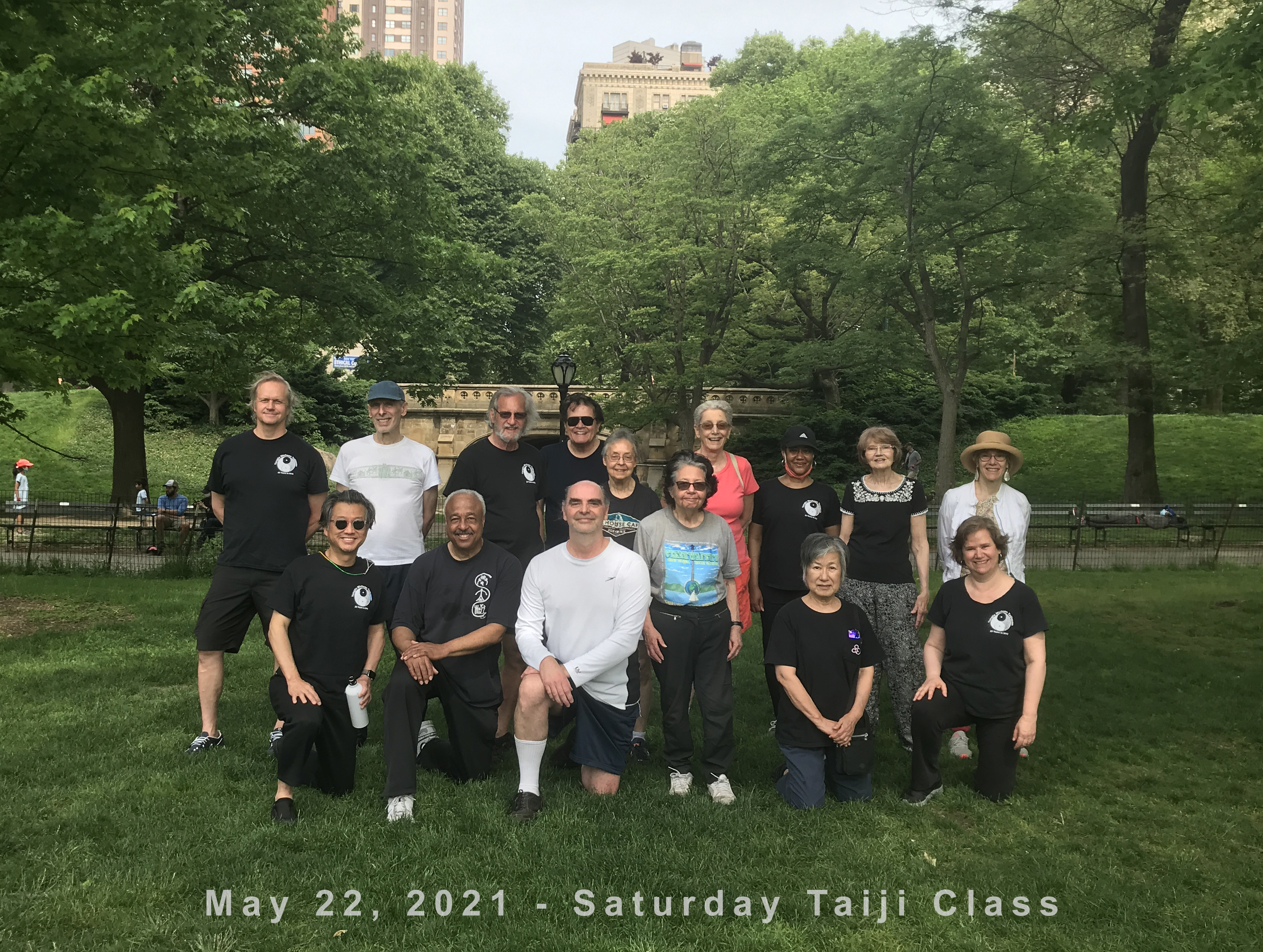
The New York Yangjia Michuan Taiji group, founded by Robert Politzer in the early 1990’s at the West Side YMCA, has met virtually, and occasionally outdoors, since Covid shut the country down in March of 2020. The Saturday group is now back in session – meeting every Saturday morning @ 8:45 in Central Park. Here is a photo of the hearty group after our second session on May 22nd.

Posted in Photographs | 2 Comments

1995 Article – Yangjia Michuan Taiji Quan, Wang Yen-nien, and the 1995 YMT World Festival

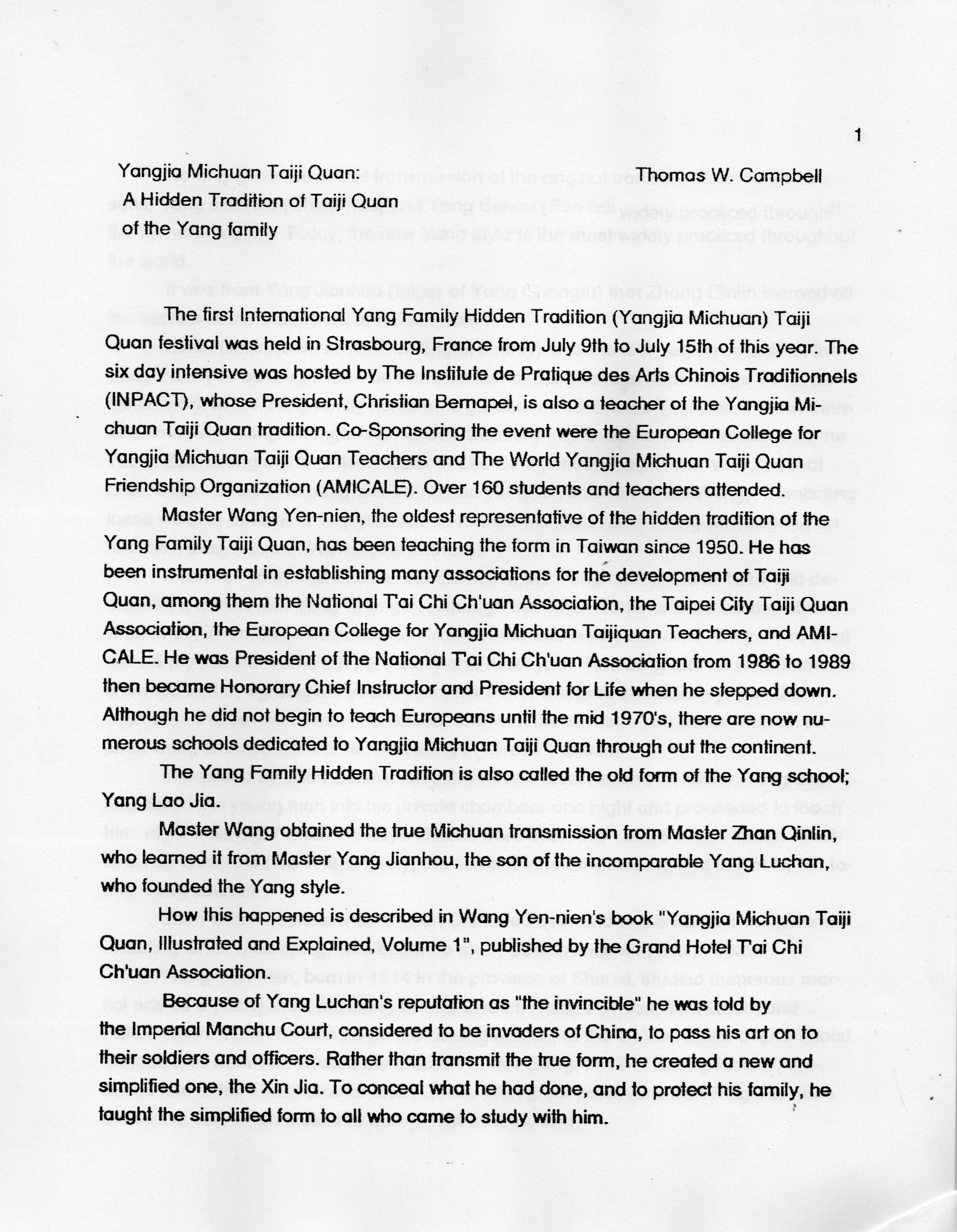
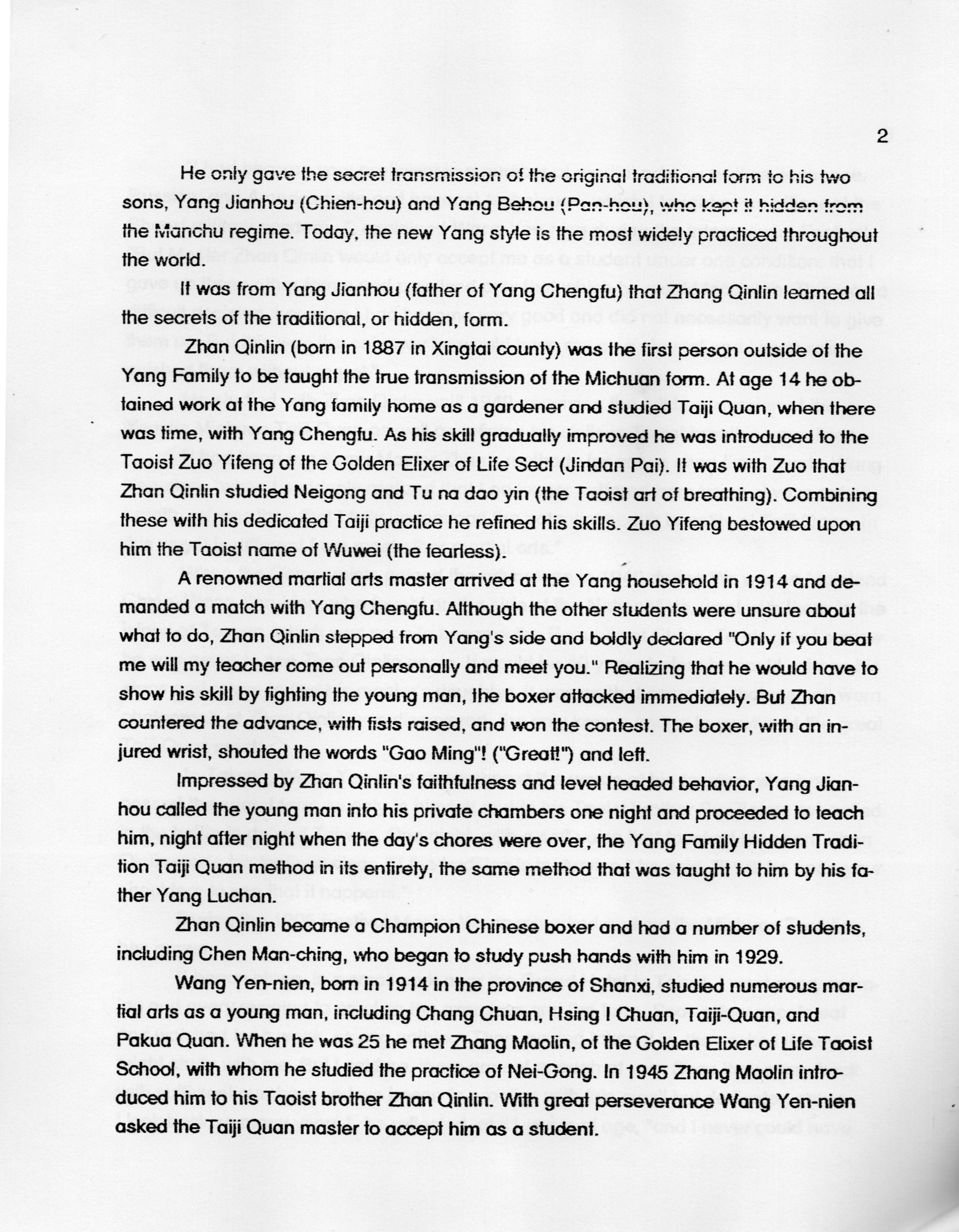
Here is an article I wrote after returning from the First International YMT Festival in Strasbourg, France in the summer of 1995. Included are some photos from the festival and a couple of moments from the NYC Taiji Group having dinner at the old Ollies on Broadway and 68th Street around that time.

1996 Taiji Dinners Ollies 1

YMT Article 1995 1

YMT Article 1995 2

YMT Article 1995 3

1995 strausbourgh WYN 3

Continue reading

Posted in Articles, Instructional, Photographs | Tagged , , , , , | 1 Comment

Yangjia Michuan Taiji NYC 2020

This slideshow requires JavaScript.

Please post a comment to your fellow Taiji friends below…

We are now meeting virtually for short Taiji classes on Saturday morning and Monday evenings.

Paul G, one of our students, just sent me this. Speaking of “walking like a cat”!


Posted in Photographs | 6 Comments

February 1, 2020 – YMT Banquet

IMG_5203

We had a wonderful Class Celebration of Yangjia Michuan Taijiquan Students and Teachers on Saturday, February 1. And had a toast of Green Tea to celebrate the Lunar New Year and 26 years of YMT at the YMCA and in NYC.

Posted in Categories, Photographs | Leave a comment

Happy Chinese New Year of the Rat

Saturday Banquet December for blog IMG_4679

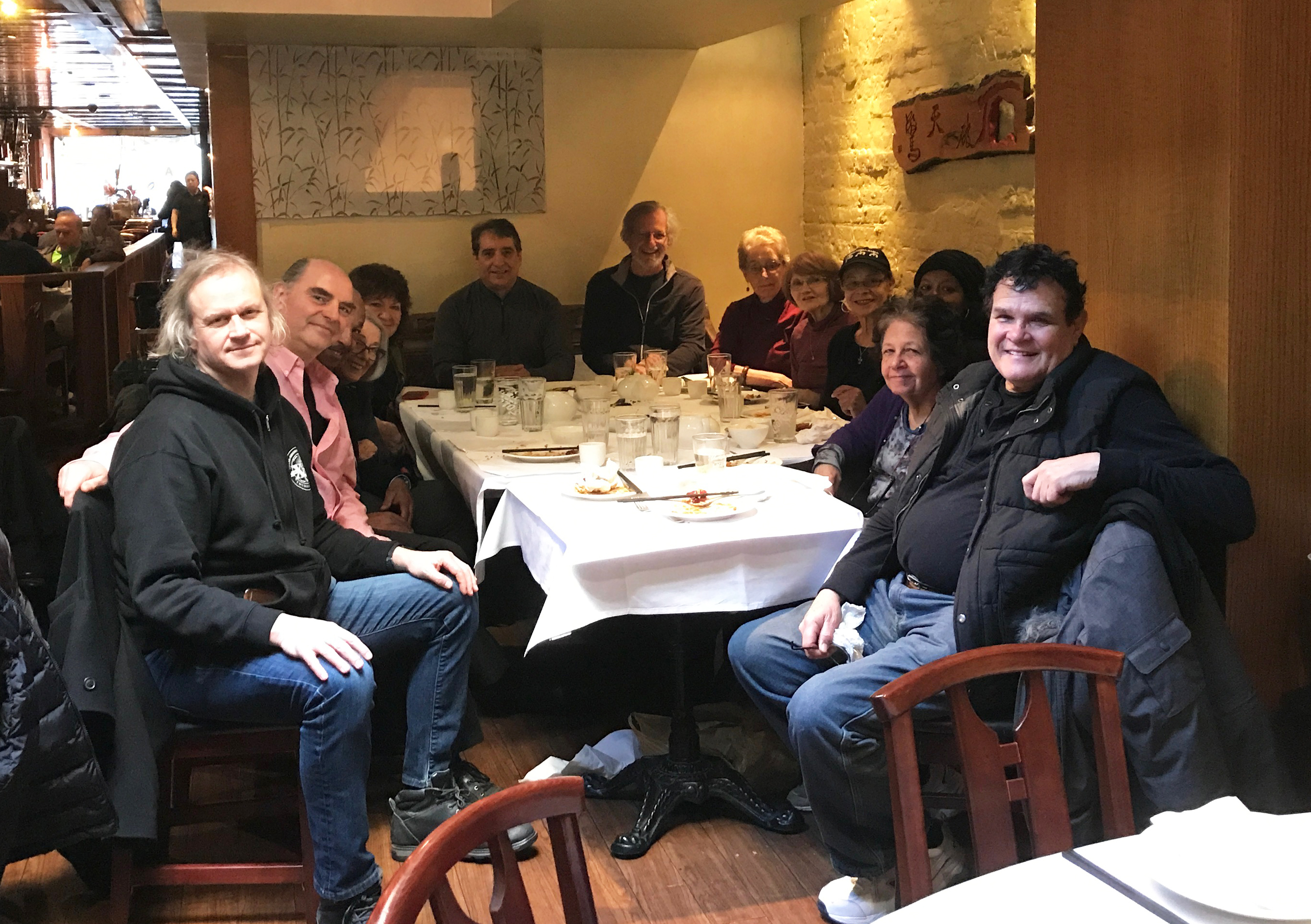
On Saturday, December 14 some of the Taiji Class gathered at Legend 72 for a noontime banquet. Good food and good conversation was had! Bob Simon is planning our New Years gathering on Saturday, February 1 and the restaurant wants reservations, so let him know if you are going to be there.

Posted in Photographs | 1 Comment

A note from Robert Politzer, Founder and Head Instructor of NYCYMT

Robert and students 2006

To My Dear Tai Chi Students:

It was deeply touching for me and my family to have trees planted in Israel in honor of our Father who passed at age 97.
You very generous and touching gift and the trees that were planted as a result will warm our hearts for years to come.

Much Love to you all.  

Posted in Photographs | Leave a comment

Happy Year of the Pig – And Taiji T-Shirts!

twn_20181203_50c

A belated happy year of the Pig to all!  Below is an image from one of our recent banquets, some nice pig stamp images, and a link to T shirts that students and teachers can buy from. I designed the logo based on one our older shirts and it celebrates 25 years of our class in NYC! Robert did a great job of making it easy, just order the size you want from the site, pay for it, and they will be all delivered to Robert who will pass them out…

Happy Year of the Pig 2019


Posted in Photographs | Leave a comment

Taiji Images – May 2108, Updated with Links

Here are some images related to our taiji classes and taiji in general. Starting at the top and moving clockwise: March 17, 2018 Saturday class in second floor room at the YMCA, Lunar New Year Stamps, March 10 YMT class banquet on 72nd Street, A taiji cookie hides in plain site, May 26, 2018 Memorial Day Class, A look at the Lincoln Plaza Cinema.

Here are two links that I have consolidated from other pages on this site for students and teachers to use.  The first is to Herve Marest’s video of the Wang Yen-nien Fan Form, which is taught in our YMT class.  The second is to Nicole Henriod’s video of the 13 Postures.  Enjoy!

Yen nien fan v3                                                              Dog 13 postures

Posted in Photographs | 2 Comments

A New Year’s Taiji Update

To get the the Year of the Dog going here are some recent – and vintage – photographs…

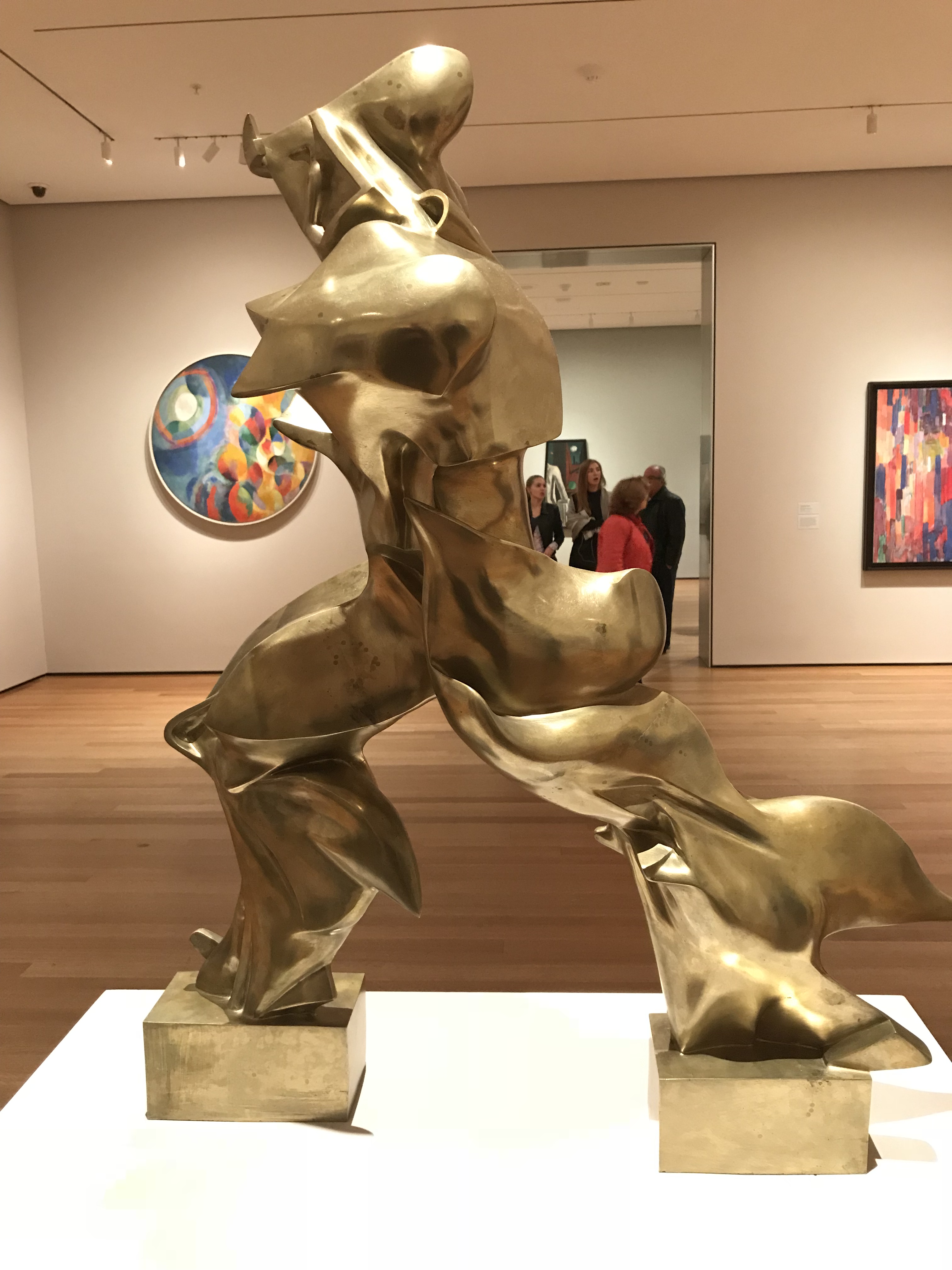
From top left, in clockwise order: 1)  The last NYC YMT class of 2017,  2) A classic art movement man,  3) A Saturday class from late in 2017,  4) Robert Politzer and Master Wang practicing tuishou in 2001 (It was a spontaneous moment sometime towards the end of a workshop that a number of us attended. I believe the photograph is courtesy of Ilana Schienman), 5) Frolicking of the House Cats, and 6) The shirt I almost bought my Mom for Christmas.


Below is an excerpt from the Thirteen Postures document that can be found here.

The Thirteen Postures – Yang Family Hidden Tradition

The Eight Upper Body Movements:
1. Ward Off – Peng
2. Roll Back – Lu
3. Press – Ji
4. Push – An
5. Pull Down / Drag Down – Tsai
6. Split / Twist the Joint – Lieh
7. Elbow – Chou
8. Shoulder – Kao

The Five Lower Body Directions:
Advancing Steps – Jin
Retreating Steps – Tui
Glance to the Left Side – Ku
Glance to the Right Side – Pan
Central Equilibrium – Ding

Here is a classic text, translated in the book “The Essence of T’ai Chi Chuan”, by Ben Lo and others.

Song Of The Thirteen Postures
Author Unknown

The thirteen postures should not be taken lightly;
The source of the postures lies in the waist.

Be mindful of the insubstantial and substantial changes;
The qi (breath) spreads throughout without hinderance.

Being still, when attacked by the opponent, be tranquil and move in stillness;
(My) changes caused by the opponent fill him with wonder.

Study the function of each posture carefully and with deliberation;
To achieve the goal is very easy.

Pay attention to the waist at all times;
Completely relax the abdomen and the qi (breath) will raise up.

When the coccyx is straight,
The shen (spirit) goes through the headtop.

To make the whole body light and agile suspend the headtop.
Carefully study.

Extension and contraction, opening and closing, should be natural.
To enter the door and be shown the way, you must be orally taught.

The practice is uninterrupted, and the technique (achieved) by self study.
Speaking of the body and its function, what is the standard?

The i (mind/intent) and qi (breath) are king, and the bones and muscles are the court.
Think over carefully what the final purpose is: to lengthen life and maintain youth.

The Song consists of 140 characters; each character is true and the meaning is complete.
If you do not study in this manner, then you will waste your time and sigh.


Posted in Articles, Instructional, Photographs | Leave a comment

Taiji in the Fall NYC

Here are a few things to celebrate the changing of the seasons.  From to top to bottom are:

Morning Taiji Class on September 22, Somewhere beautiful in Vermont, A Class Taiji Banquet on June 24, Morning Taiji Class on May 20, A Tasty Cookie by Holly Leavy, A Collection of Fish, A Whisker Friendly Catfood Dish.

Yen nien fan v3

Posted in Photographs | Comments Off on Taiji in the Fall NYC

Some articles about Taiji and Health

Two of our students sent a link to a recent article in the New York Times about Balance and Taiji. This continues a consistent series of positive studies demonstrating the relationship between exercise (and taiji in particular) and health. Below is a link to the NYTimes article and a few others as well. And there is a short article about Wang Yen-nien, the fourth generation master of Yangjia Michuan, at the bottom of the list.

What are the Health Benefits of Tai Chi?


Try tai chi to improve balance, avoid falls


Tai Chi and Postural Stability in Patients with Parkinson’s Disease


Tai Chi Helps Parkinson’s Patients


Tai Chi Chuan optimizes the… human brain architecture in older adults.


The Master of a Generation: A Short Biography of Wang Yen-nien (1914-2008)


Posted in Articles | Leave a comment

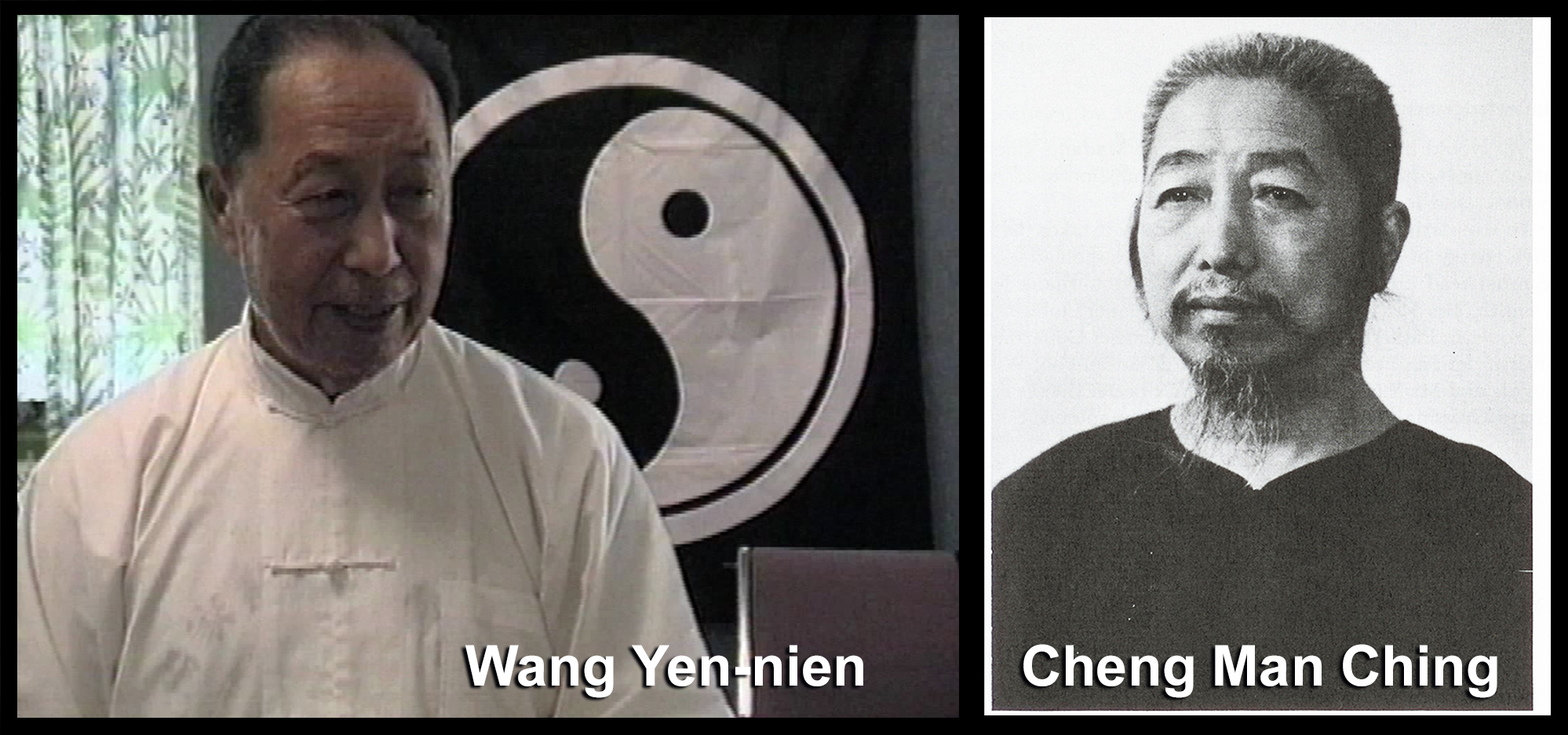
Wang Yen-nien and Cheng Man Ching

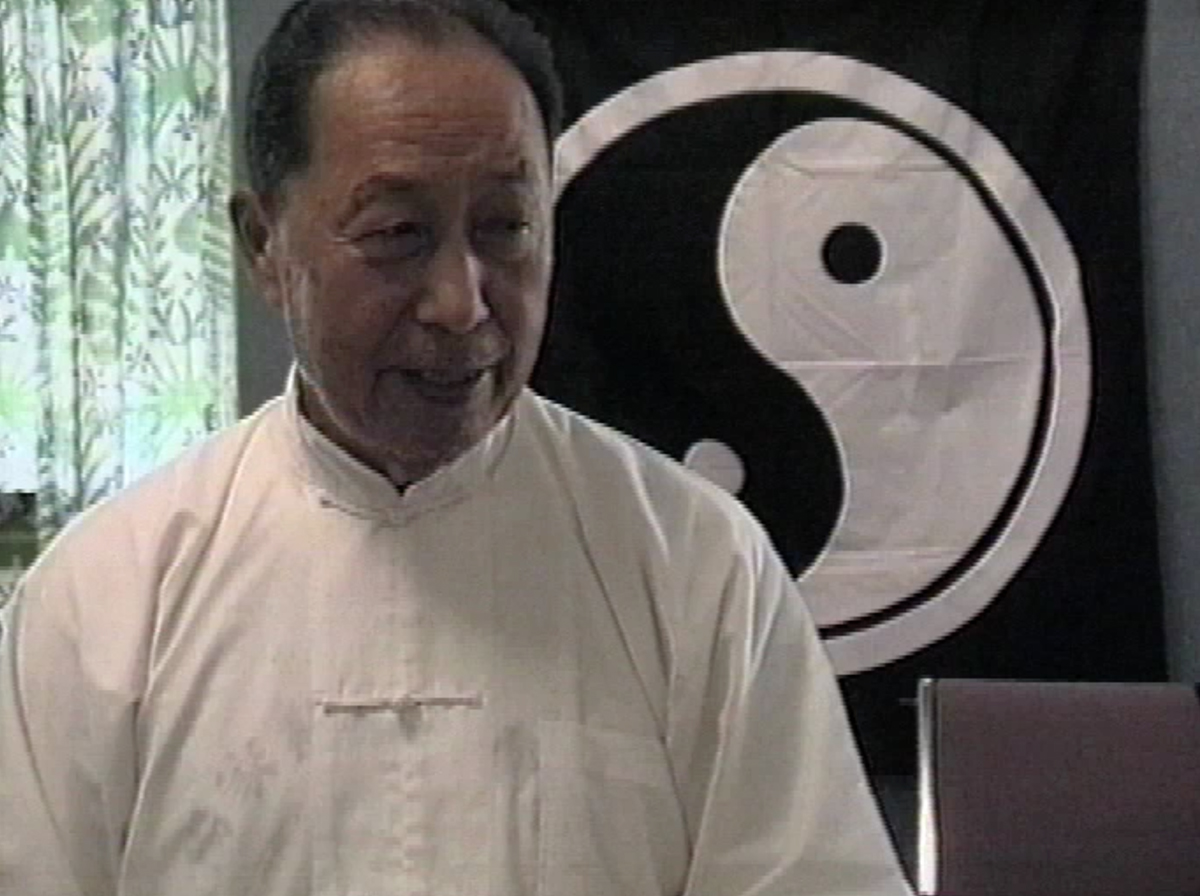
An interview with Wang Yen-nien

By Thomas W. Campbell

This is an excerpt from the talk I had with Master Wang in Madison, Wisconsin in 2002.  It refers to his relationship to Master Cheng Man Ching, probably the most famous taiji teacher who came to teach in the United States. Wang Yen-nien knew Cheng Man-Ching when they both were in Taiwan in the late 1950’s and early 1960’s. There are many students who are descendants of Cheng Man Ching’s teaching in the United States but the relationship of the two masters is little known.


Wang Yen-nien Cheng Man Ching

TWC – We encounter students and teachers of Cheng Man Ching’s lineage who know little or nothing of your relationship with Cheng Man Ching. Would you please discuss this relationship?

WYN – I call Cheng Man Ching my older martial art brother. Why is that? That’s because he was a vowed student of Zhang Qinlin, who was also my teacher. What he studied with Zhang Qinlin was tuishou and neigong. And so because of this relationship with Zhang Qinlin we became martial art brothers. He was older than me so I call him my older martial art brother. At that time, in China, at the time he became a vowed student of Zhang Qinlin, my teacher, Cheng Man Ching was already a practicing a Yang style, not Yangjia Michuan, but another style. So because he only knew taijiquan at that time and not tuishou, he found Zhang Qinlin and wanted to practice tuishou.

In the beginning Cheng Man Ching invited Zhang Qinlin, who had been living in Shanzi province, to Nanjing. He arranged for him to teach for three months. Then, in Nanjing, with Zhang Qinlin, Cheng practiced and studied tuishou for three months; the most important things that he asked Zhang Qinlin to teach him were tuishou and neigong.

In those days, whether you were a martial artist, or whether you were a Daoist, the relationship between the teacher and the student was a very very important one. When I became a vowed student of Zhang Qinlin, my relationship with Cheng Man Ching was established. And you can never erase this relationship. Because he bowed and became a vowed student of Zhang Qinling and this created a relationship between the two of us. The difference, though, is that not only did I practice tuishou and neigong but I also learned Yangjia Michuan Taijiquan. And Zhang Qinlin taught me the complete system, and not CMC.

This is to state once again that my relationship with Cheng Man Ching is due to the fact that we are both vowed disciples of Zhang Qinlin.

Published in AYMTA Journal, Fall 2002.

Posted in Articles, Categories, Photographs | Tagged , , , , | Leave a comment

2000 – Wang Yen-nien, Fifty Years of Teaching

In 2000 I wrote an editorial for AYMTA (American Yangjia Michuan Taijiquan Association) on the occasion of Master Wang Yen-nien’s fiftieth year of teaching Taiji. The article is reprinted below. In 1996 the New York School of Yangjia Michuan were the hosts of his first visit to New York City

Wang Yen-nien was born in December, 1914 and passed away on May 4, 2008.

Wang Yen-nien 1996

Wang Yen-nien: Fifty Years of Teaching Taijiquan 
Editorial by Thomas W. Campbell, originally published
in the AYMTA Journal, Fall 2000.

Congratulations to our teacher Wang Yen-nien in his fiftieth year of teaching.  Students around the world practice Yangjia Michuan Taijiquan and are healthier in both mind and body by doing so. This journal, which is a collaboration between AYMTA, Julia Fisher Fairchild, and Master Wang,  is testimony to the rich history and profound vitality of the art that Master Wang has worked so hard to preserve and to see flourish.

There are thousands of students and teachers around the world who have learned from Master Wang  – both directly and from practicing with those who he has taught.  To study with a true master is not something to be taken lightly. When we look around at those who are in position to teach – in commerce, in art, in politics, we find very few who have attained the highest level in their field – and even fewer who have done so as selflessly and as genourously as has Master Wang.  Between these pages you will encounter, in both words and images, testimony to the talents of Master Wang. This quality comes from his high level of skill, his gongfu, his unparrelled understanding of taijiquan, neigong and meditation. It also comes from his devotion to his students. Others have attained high levels of skill. But how many have given as much to the taiji community as has Master Wang? How many have lived and breathed taiji – and taken every opportunity to share his or her knowledge and passion with all students who have knocked on his door. Wang Yen-nien, who left his homeland because of Civil war, who carried an otherwise lost art with him, who began to transmit the direct lineage of Yang Luchan to students one at a time with patience and devotion, who left the military government to teach Yangjia Michuan full -time when he found students who understood the value of what they were receiving, who would ultimately travel the world, even in his eighties when health issues were part of his life, finding the embrace of students who were honored to learn from him.

Take a moment and recall when you first met Master Wang. What were the circumstances? Where were you? What were your expectations? What was the result of that day?

I began to practice Yangjia Michuan in early 1993, a long time ago for some, just yesterday to others. About a year and a half later my teacher, Robert Politzer, invited some of his students to attend a “Tien Ming” ceremony in Washington D.C. On that day Master Wang initiated 11 student/teachers into the Daosist school. As I watched the ceremony it dawned on me that I was no longer in the middle of Washington D.C. – rather I was in a sacred Daoist space. The robes, the religious artifacts, the demeanor of those around me helped to create this impression. But the center from which everything flowed was the man with dark hair and a twinkle in his eyes.  As each student approached him to recieve the ceremonial  blessing that would welcome them into the Golden Mountain school I felt that all in that room were being touched by his hand. It was a serious affair that spoke of ancient ways superseding the everyday cares of modern life.

Master Wang, of course, is a keen judge of what is transpiring around him. After the ceremony he spoke to us. “This is not a cult” he said, concerned for those of us who knew little of Chinese ways. “Why are we here? It was fate that we would come together like this”

Fate? I look back on the day that I walked into my teacher’s very first class, on the day that I first found myself in the presence of Wang Laoshi, on the time that I first visited Europe to attend the Strassbourgh International Festival, on the day that I could first say that I knew the full Yangjia Michuan form (still so much to learn!), on the day that I began to teach, on the day that I became a board member of AYTMA and took over the work of the journal, and on today, as I have the privilige to write this small article in such an important issue as this one. Yes, I do believe it was fate that guided me to Wang Yen-nien and to those who have learned from him.  Fate can open our eyes but we must learn to see with them. Let us all learn from the lessons that Wang Laoshi continues to teach.  Let us also continue to find ways that we can pass our knowledge to others.  It is in the interaction between and among students and teachers that we will continue what we have learned from our teacher.

Thank you , Master Wang, from all of us who are your students.


Posted in Articles, Photographs | Tagged , , , , , | Leave a comment

A Small Selection of Books on Taijiquan

img_5657Early in our studies Robert Politzer, who founded the New York Yangjia Michuan Taiji School in 1993 and is the head teacher, gave us a book list. It contained a number of essential taiji texts and represented the beginning of my own library of taiji related books. I found a list from the year 2000, which I believe has added a few titles. To it I have added a work by William C. C. Chen, who was a friend of Wang Yen-nien and still teaches in NYC. Included as well is a book by Chen Man-ching, who was a younger Daoist brother and friend of Master Wang.

Here is the list, in the order that a beginner might want to proceed:

Taiji Reading List:

The Essence of T’ai Chi Ch’uan

translated by Lo/Inn/Amacker/Foe

ISBN 0-913028-63-0

T’ai-chi Touchstones -Yang Family Secret Transmissions

Revised Edition

by Douglas Wile

Sweet Ch’i Press

T’ai Chi Ch’uan Ta Wen (Questions and Answers)

by Chen wei-ming

ISBN  0-938190-67-9
Sweet Ch’i Press

T’ai Chi Classics

translated by Waysun Liao

ISBN 0-87773-531-x

Continue reading

Posted in Articles, Photographs | Tagged , , , | Leave a comment

New Year Banquet 2017

We had our annual Chinese New Year Lunch (Banquet) for the Yangjia Michuan Taijiquan class on Saturday, January 28. Good conversation and good food were had.

Happy Year of the Rooster to all!

taiji-dinner-jan-28

Posted in Photographs | Leave a comment

Taiji in Strasbourg – 1995

In the summer of 1995 a large group of the original members of the New York City YMT group traveled to Strasbourg, France to participate in an international gathering of Yangjia Michuan students and teachers. Wang Yen-nien, fourth generation master of the system, led the workshops and events. Julia Fairchild, Christian Bernapel and numerous other veteran teachers were among those in attendance. We had all begun practicing with Robert Politzer less than two year prior so it was a heady and exciting experience.
Thanks to Arnold C. Baker II for supplying the pictures.

Strasbourg Taiji Group with WYN v2

James Best, Robert Politzer, Wang Yen-nien, Gretchen MacLane, Lisa Birnbaum, Thomas W. Campbell, Arnold C Baker II, George Vlachos and Mike Stone. Strasbourg, France Yangjia Michuan Taiji Gathering and Workshops. Summer 1995.


March 2017 UPDATE:

Here is a short list of questions that I found in my European notebook from the summer of 1995. (I believe a number of us put our heads together for these as they are in different hand writing).

Questions for Master Wang

1) At a recent “push-hands” tournament every player (Mainly New-Yang players) began with their weight on the front leg. We have been taught to be more centered on the back leg. Why or how has this difference emerged?

2) What is the relationship between hardness and softness in our style? In push hands?

3) Please explain the legwork in “tai” (“cai” / “drag down”).

4) Please explain the front leg pivot in “monkey retreats”… most notably whether or not we pivot on the heel or toe.

5) in “Right, turn, tame the tiger” I am having trouble accomplishing the move with consistency. What are the important points that I should be looking at and considering?

6) During ”Hit the tiger” in section two, is the entire move performed facing the diagonal?

Arnold B Strasbourgh Taiji 1995

Arnold C Baker II enjoying the French Cityscape.

Strasbourg taiji Tom C Cafe V2

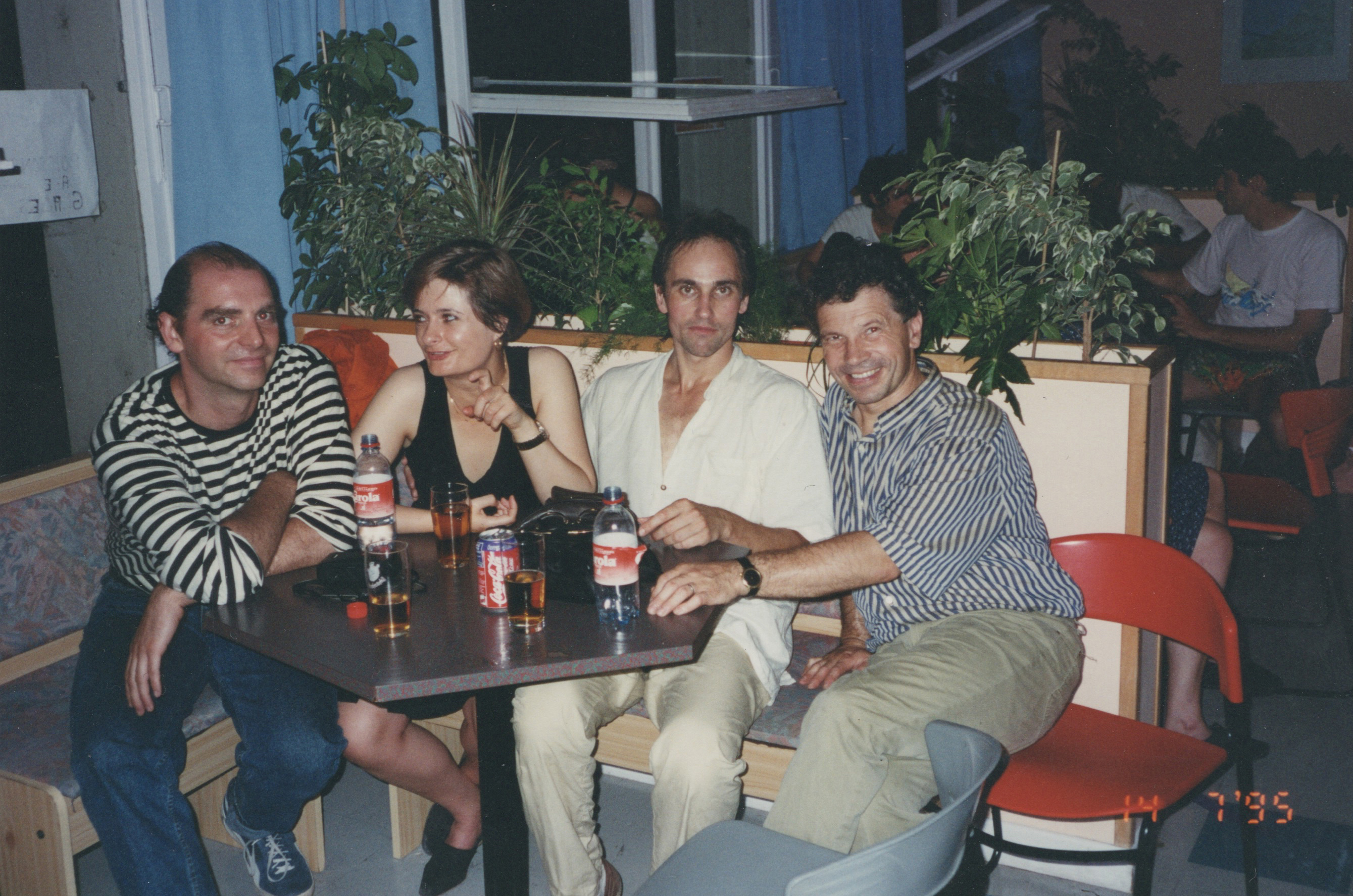
Social hour for the taiji crowd.

WYN leaves floor Strasbourgh taiji

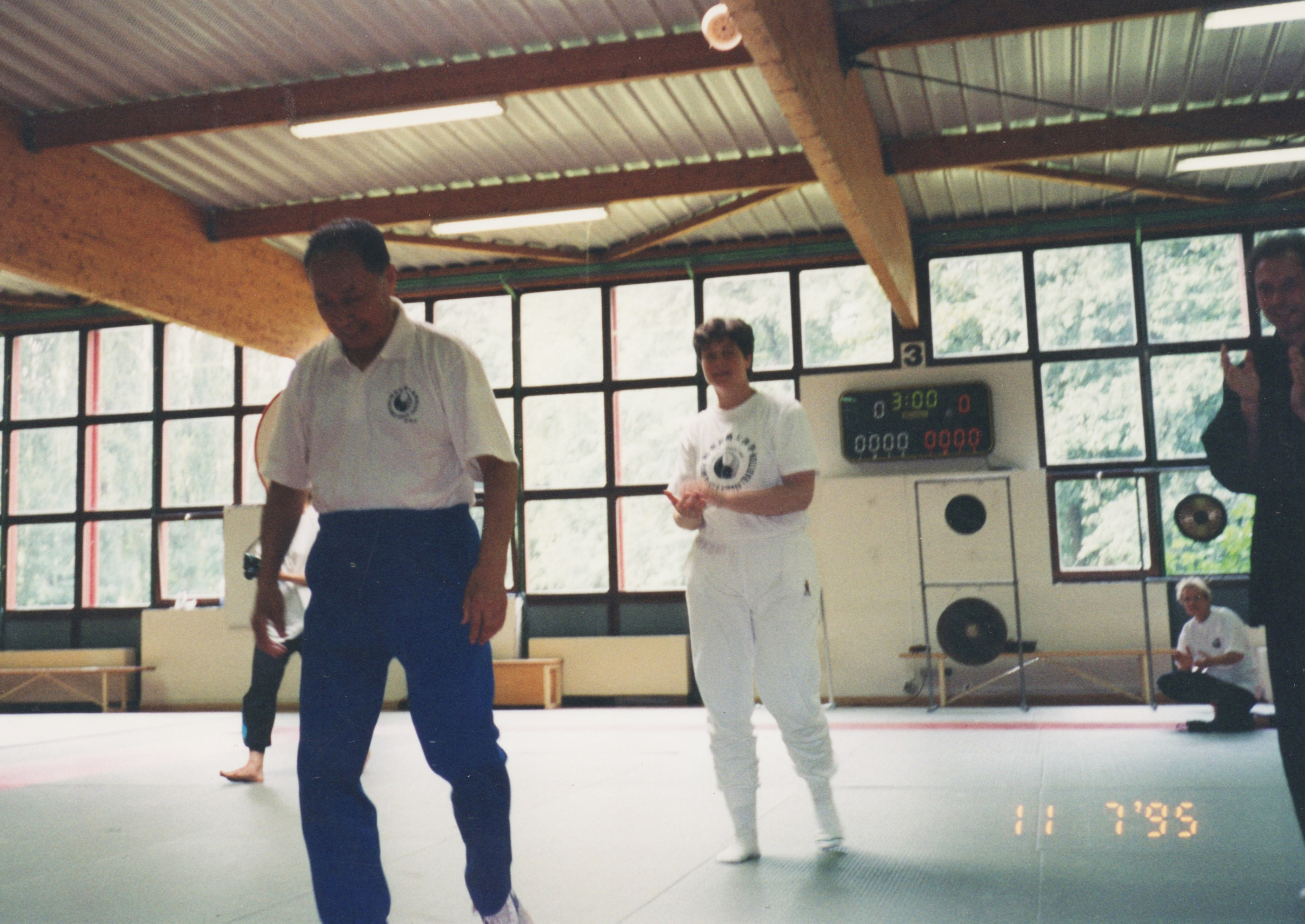
Wang Yen-nien steps off the mattes after a demonstration to students and teachers. Julia Fairchild is also seen, as is Luc Defago, to the right.

Strasbourg taiji Arnold and Tom v2

Arnie Baker and Tom Campbell begin the Ba Fa sequence, among an international group.

Posted in Articles, Photographs | 1 Comment

Yangjia Michuan Taijiquan Study Aids

YMT Logo NYC 2005 taiji class DSCF8354edit
Yangjia Michuan Taijiquan Study Aids
Here is a link to a document that could be helpful for students who are learning and practicing the 13 postures of the Yang Family Hidden Tradition: 13 postures YMT Introduction .

And a link to a nice video featuring Nicole Henriod, a french YMT teacher, demonstrating the 13 postures of the Yangjia Michuan form.

UPDATED August 16, 2015: Below is a link to Wang Yen-nien demonstrating the first section (first duan) of the Yangjia Michuan Taiji form. It was recorded in Taipei, where he taught and lived. It is said to be from 1987 – it seems like it could be earlier to me. Regardless, it is a valuable view of the form as he taught and practiced it:

UDATED May 13, 2016: And below is a link of George C. Lin, a disciple of Wang Yen-nien. Many members of Robert Politzer’s original class circa 1993-2001 were able to meet and to study with Master Wang in Europe and in the states.

Posted in Articles, Film and Video, Instructional, Photographs | Tagged , , , | 6 Comments

1996 – Wang Yen-nien Lecture Part one

In 1996 Master Wang Yen-nien and Julia Fairchild visited New York City for an extensive workshop that covered The First Duan, Meditation, and The 15 Basic Tuishou exercises.
On Friday evening, the day before the start of the workshops, Master Wang addressed a large gathering in the Little Theater at the West Side YMCA. Below is part one of the 90 minute lecture.

Wang Yen-nien Lecture – New York City, June 21, 1996
Translation: Julia Fairchild, Moderator: Robert Politzer
Video Production and Editing by Thomas W. Campbell

Part One: Eight Minutes

Posted in Film and Video, Instructional | Tagged , , , , , , | 1 Comment

A Brief History of YMT in New York City

Yangjia Michuan Taijiquan in New York City
By Gretchen MacLane

taiji Class 2006

There have been great changes in the New York Yangjia Michuan Taijiquan group since Robert Politzer began teaching in April 1994.

Robert had lived in Taiwan studying with Wang Yen-nien mornings and evenings seven days a week.  Robert is very musical and picked up spoken Chinese quickly.  After three or four extended stays in Taiwan Robert married Barbara and settled in New York City, both teaching junior high school on the West Side of Manhattan.

He persuaded the then-director of the West Side YMCA to incorporate a taiji class two evenings a week.  Arnold Baker and Tom Campbell have been there since that first class. Christian Bernapel created the First International Festival in Strasbourg and Robert and seven members of the class attended.  The final summer weekend of 1995 Robert arranged the first Baker Camp workshop for the seven and his wife and new baby, Rachel.  Subsequently there were three more workshops at Baker Camp in Harriman State Park just outside the city.

WTDAY - Group-WIDE -0001

The following year, 1996, Robert organized a weekend event at the YMCA.  Master Wang lectured in the Little Theater Friday evening and taught a two-day Section 1 workshop in the children’s gym.  Two additional two-day workshops, neigong and push hands, took place in an upstate college.  That fall Robert continued the teaching of neigong and push hands near his apartment in Inwood Park at the northwest point of Manhattan.

The YMCA has a land-marked façade in a building close to Central Park.  The new executive team sold the air rights to the developers of a 40-story apartment building.  The community protested the height, there was litigation but the project went through.  The YMCA got additional space.  Originally the taiji classes were in an auditorium, called the Little Theater.  It was pleasantly higgledy-piggledy and spacious.  The taiji class was relocated during construction, first to a children’s gym, then to the basement in the old cafeteria.  Mice and cockroaches ran through.  The original plans called for a martial-arts studio in the new construction but when opened that area was filled with ellipsoidal machines.  The taiji classes, two times a week, were in the Group Exercise Studio, a lovely, high-ceilinged gym.  Originally there were double-high casement windows flooding the studio with light, but they had to be boarded up against the west wall of the new apartment building.

Sword class 2005 DSCF4692

Once the classes were upstairs in the central exercise area, there was an executive policy change and all classes had to be open to everyone at all times.  Heretofore people registered and paid a small amount for three months of twice-a-week two-hour classes.  Robert was able to nicely structure the classes and incorporate push hands.  Once the classes were opened up there were many people, mostly older, who did not want to do push hands.  The taiji classes diminished in size, yoga became hugely popular, and the YMCA ran through the money from the developer.  Robert had another child, Benjamin, and his wife wanted him home more.  The director shortened the class times to an hour.

Now Tom Campbell teaches twice a week: he teaches a class early Saturday morning that was added at the request of the older members.  The Saturday class is the best attended; the seniors love Tom, his optimism and devotion to taiji.  That class is an hour and half; thus more time can be devoted to basic exercises and form teaching.  Robert teaches the more advanced class once a week and Tom takes the other evening, an intermediate class.  Gretchen MacLane assists by taking the beginners to the side the two evenings a week and fills in if Robert or Tom must be away.  Arnold Baker and Ilana Sheinman assist Tom with the Saturday morning class.

Roll back C park DSCF0579
Visitors from all over America and France, Spain, the United Kingdom and Switzerland have contacted us to arrange for a guest pass for any of the classes.  For lodging, the Y is a nonprofit organization (no hotel tax) and has hotel accommodations ranging from a room with a bath to dormitory/shared bath that can be arranged for a 10 percent discount.  Lincoln Center is across the street.

This article is being republished. It was originally published in the American Yangjia Michuan Taijiquan Association Journal in the fall/winter of 2011.

Posted in Articles, Photographs | Tagged , , , , , | 1 Comment

YMT Study Aids – Part Two


YMT Logo NYC 2005 taiji class DSCF8354edit
Yangjia Michuan Taijiquan Study Aids
Here is a link to a document that could be helpful for students who are learning and practicing the 13 postures of the Yang Family Hidden Tradition: 13 postures YMT Introduction .  And a Link to a nice video featuring Nicole Henriod, a french YMT teacher, demonstrating the 13 postures of the Yangjia Michuan form. For video relating to all aspects of the Yang Family Hidden Tradition you can click HERE.

UPDATED August 16, 2015: Here is a link to Wang Yen-nien demonstrating the first section (first duan) of the Yangjia Michuan Taiji form. It was recorded in Taipei, where he taught and lived. It is said to be from 1987 – it seems like it could be earlier to me. Regardless, it is a valuable view of the form as he taught and practiced it:

UDATED May 13, 2016: And below is a link of George C. Lin, a disciple of Wang Yen-nien. Many members of Robert Politzer’s original class circa 1993-2001 were able to meet and to study with him in Europe and in the states.

Posted in Instructional, Photographs | Tagged , , , , , | Leave a comment